



















Mr. President, Mr. Secretary General, fellow delegates, ladies and gentlemen: each year we come together to reaffirm the founding vision of this institution. For most of recorded history, individual aspirations were subject to the whims of tyrants and empires. Divisions of race, religion and tribe were settled through the sword and the clash of armies. The idea that nations and peoples could come together in peace to solve their disputes and advance a common prosperity seemed unimaginable.
It took the awful carnage of two world wars to shift our thinking. The leaders who built the United Nations were not naïve; they did not think this body could eradicate all wars. But in the wake of millions dead and continents in rubble; and with the development of nuclear weapons that could annihilate a planet; they understood that humanity could not survive the course it was on. So they gave us this institution, believing that it could allow us to resolve conflicts, enforce rules of behavior, and build habits of cooperation that would grow stronger over time.
For decades, the U.N. has in fact made a real difference – from helping to eradicate disease, to educating children, to brokering peace. But like every generation of leaders, we face new and profound challenges, and this body continues to be tested. The question is whether we possess the wisdom and the courage, as nation-states and members of an international community, to squarely meet those challenges; whether the United Nations can meet the tests of our time.
For much of my time as President, some of our most urgent challenges have revolved around an increasingly integrated global economy, and our efforts to recover from the worst economic crisis of our lifetime. Now, five years after the global economy collapsed, thanks to coordinated efforts by the countries here today, jobs are being created, global financial systems have stabilized, and people are being lifted out of poverty. But this progress is fragile and unequal, and we still have work to do together to assure that our citizens can access the opportunity they need to thrive in the 21st century.
Together, we have also worked to end a decade of war. Five years ago, nearly 180,000 Americans were serving in harm’s way, and the war in Iraq was the dominant issue in our relationship with the rest of the world. Today, all of our troops have left Iraq. Next year, an international coalition will end its war in Afghanistan, having achieved its mission of dismantling the core of al Qaeda that attacked us on 9/11.
For the United States, these new circumstances have also meant shifting away from a perpetual war-footing. Beyond bringing our troops home, we have limited the use of drones so they target only those who pose a continuing, imminent threat to the United States where capture is not feasible, and there is a near certainty of no civilian casualties. We are transferring detainees to other countries and trying terrorists in courts of law, while working diligently to close the prison at Guantanamo Bay. And just as we reviewed how we deploy our extraordinary military capabilities in a way that lives up to our ideals, we have begun to review the way that we gather intelligence, so as to properly balance the legitimate security concerns of our citizens and allies, with the privacy concerns that all people share.
As a result of this work, and cooperation with allies and partners, the world is more stable than it was five years ago. But even a glance at today’s headlines indicates the dangers that remain. In Kenya, we’ve seen terrorists target innocent civilians in a crowded shopping mall. In Pakistan, nearly 100 people were recently killed by suicide bombers outside a church. In Iraq, killings and car bombs continue to be a horrific part of life. Meanwhile, al Qaeda has splintered into regional networks and militias, which has not carried out an attack like 9/11, but does pose serious threats to governments, diplomats, businesses and civilians across the globe.
Just as significantly, the convulsions in the Middle East and North Africa have laid bare deep divisions within societies, as an old order is upended, and people grapple with what comes next. Peaceful movements have been answered by violence – from those resisting change, and from extremists trying to hijack change. Sectarian conflict has reemerged. And the potential spread of weapons of mass destruction casts a shadow over the pursuit of peace.
Nowhere have we seen these trends converge more powerfully than in Syria. There, peaceful protests against an authoritarian regime were met with repression and slaughter. In the face of carnage, many retreated to their sectarian identity – Alawite and Sunni; Christian and Kurd – and the situation spiraled into civil war. The international community recognized the stakes early on, but our response has not matched the scale of the challenge. Aid cannot keep pace with the suffering of the wounded and displaced. A peace process is still-born. America and others have worked to bolster the moderate opposition, but extremist groups have still taken root to exploit the crisis. Assad’s traditional allies have propped him up, citing principles of sovereignty to shield his regime. And on August 21st, the regime used chemical weapons in an attack that killed more than 1,000 people, including hundreds of children.
The crisis in Syria, and the destabilization of the region, goes to the heart of broader challenges that the international community must now confront. How should we respond to conflicts in the Middle East and North Africa – conflicts between countries, but also conflicts within them? How do we address the choice of standing callously by while children are subjected to nerve gas, or embroiling ourselves in someone else’s civil war? What is the role of force in resolving disputes that threaten the stability of the region and undermine all basic standards of civilized conduct? What is the role of the United Nations, and international law, in meeting cries for justice?
Today, I want to outline where the United States of America stands on these issues. With respect to Syria, we believe that as a starting point, the international community must enforce the ban on chemical weapons. When I stated my willingness to order a limited strike against the Assad regime in response to the brazen use of chemical weapons, I did not do so lightly. I did so because I believe it is in the security interest of the United States and the world to meaningfully enforce a prohibition whose origins are older than the U.N. itself. The ban against the use of chemical weapons, even in war, has been agreed to by 98 percent of humanity. It is strengthened by the searing memories of soldiers suffocated in the trenches; Jews slaughtered in gas chambers; and Iranians poisoned in the many tens of thousands.
The evidence is overwhelming that the Assad regime used such weapons on August 21st. U.N. inspectors gave a clear accounting that advanced rockets fired large quantities of sarin gas at civilians. These rockets were fired from a regime-controlled neighborhood, and landed in opposition neighborhoods. It is an insult to human reason – and to the legitimacy of this institution – to suggest that anyone other than the regime carried out this attack.
I know that in the immediate aftermath of the attack, there were those who questioned the legitimacy of even a limited strike in the absence of a clear mandate from the Security Council. But without a credible military threat, the Security Council had demonstrated no inclination to act at all. However, as I’ve discussed with President Putin for over a year, most recently in St. Petersburg, my preference has always been a diplomatic resolution to this issue, and in the past several weeks, the United States, Russia and our allies have reached an agreement to place Syria’s chemical weapons under international control, and then to destroy them.
The Syrian government took a first step by giving an accounting of its stockpiles. Now, there must be a strong Security Council Resolution to verify that the Assad regime is keeping its commitments, and there must be consequences if they fail to do so. If we cannot agree even on this, then it will show that the U.N. is incapable of enforcing the most basic of international laws. On the other hand, if we succeed, it will send a powerful message that the use of chemical weapons has no place in the 21st century, and that this body means what it says.
Agreement on chemical weapons should energize a larger diplomatic effort to reach a political settlement within Syria. I do not believe that military action – by those within Syria, or by external powers – can achieve a lasting peace. Nor do I believe that America or any nation should determine who will lead Syria – that is for the Syrian people to decide. Nevertheless, a leader who slaughtered his citizens and gassed children to death cannot regain the legitimacy to lead a badly fractured country. The notion that Syria can return to a pre-war status quo is a fantasy. It’s time for Russia and Iran to realize that insisting on Assad’s rule will lead directly to the outcome they fear: an increasingly violent space for extremists to operate. In turn, those of us who continue to support the moderate opposition must persuade them that the Syrian people cannot afford a collapse of state institutions, and that a political settlement cannot be reached without addressing the legitimate fears of Alawites and other minorities.
As we pursue a settlement, let us remember that this is not a zero-sum endeavor. We are no longer in a Cold War. There’s no Great Game to be won, nor does America have any interest in Syria beyond the well-being of its people, the stability of its neighbors, the elimination of chemical weapons, and ensuring it does not become a safe-haven for terrorists. I welcome the influence of all nations that can help bring about a peaceful resolution of Syria’s civil war. And as we move the Geneva process forward, I urge all nations here to step up to meet humanitarian needs in Syria and surrounding countries. America has committed over a billion dollars to this effort, and today, I can announce that we will be providing an additional $340 million. No aid can take the place of a political resolution that gives the Syrian people the chance to begin rebuilding their country – but it can help desperate people survive.
What broader conclusions can be drawn from America’s policy toward Syria? I know there are those who have been frustrated by our unwillingness to use our military might to depose Assad, and believe that a failure to do so indicates a weakening of America’s resolve in the region. Others have suggested that my willingness to direct even limited military strikes to deter the further use of chemical weapons shows that we have learned nothing from Iraq, and that America continues to seek control over the Middle East for our own purposes. In this way, the situation in Syria mirrors a contradiction that has persisted in the region for decades: the United States is chastised for meddling in the region, and accused of having a hand in all manner of conspiracy; at the same time, the United States is blamed for failing to do enough to solve the region’s problems, and for showing indifference toward suffering Muslim populations.
I realize some of this is inevitable, given America’s role in the world. But these attitudes have a practical impact on the American peoples’ support for our involvement in the region, and allow leaders in the region – and the international community – to avoid addressing difficult problems. So let me take this opportunity to outline what has been U.S. policy towards the Middle East and North Africa, and what will be my policy during the remainder of my presidency.
The United States of America is prepared to use all elements of our power, including military force, to secure these core interests in the region.
We will confront external aggression against our allies and partners, as we did in the Gulf War.
We will ensure the free flow of energy from the region to the world. Although America is steadily reducing our own dependence on imported oil, the world still depends upon the region’s energy supply, and a severe disruption could destabilize the entire global economy.
We will dismantle terrorist networks that threaten our people. Wherever possible, we will build the capacity of our partners, respect the sovereignty of nations, and work to address the root causes of terror. But when its necessary to defend the United States against terrorist attacks, we will take direct action.
And finally, we will not tolerate the development or use of weapons of mass destruction. Just as we consider the use of chemical weapons in Syria to be a threat to our own national security, we reject the development of nuclear weapons that could trigger a nuclear arms race in the region, and undermine the global non-proliferation regime.
Now, to say these are America’s core interests is not to say these are our only interests. We deeply believe it is in our interest to see a Middle East and North Africa that is peaceful and prosperous; and will continue to promote democracy, human rights, and open markets, because we believe these practices achieve peace and prosperity. But I also believe that we can rarely achieve these objectives through unilateral American action – particularly with military action. Iraq shows us that democracy cannot be imposed by force. Rather, these objectives are best achieved when we partner with the international community, and with the countries and people of the region.
What does this mean going forward? In the near term, America’s diplomatic efforts will focus on two particular issues: Iran’s pursuit of nuclear weapons, and the Arab-Israeli conflict. While these issues are not the cause of all the region’s problems, they have been a major source of instability for far too long, and resolving them can help serve as a foundation for a broader peace.
The United States and Iran have been isolated from one another since the Islamic Revolution of 1979. This mistrust has deep roots. Iranians have long complained of a history of U.S. interference in their affairs, and America’s role in overthrowing an Iranian government during the Cold War. On the other hand, Americans see an Iranian government that has declared the United States an enemy, and directly – or through proxies – taken Americans hostage, killed U.S. troops and civilians, and threatened our ally Israel with destruction.
I don’t believe this difficult history can be overcome overnight – the suspicion runs too deep. But I do believe that if we can resolve the issue of Iran’s nuclear program, that can serve as a major step down a long road towards a different relationship – one based on mutual interests and mutual respect.
Since I took office, I have made it clear – in letters to the Supreme Leader in Iran and more recently to President Rouhani – that America prefers to resolve our concerns over Iran’s nuclear program peacefully, but that we are determined to prevent them from developing a nuclear weapon. We are not seeking regime change, and we respect the right of the Iranian people to access peaceful nuclear energy. Instead, we insist that the Iranian government meet its responsibilities under the Nuclear Non-Proliferation Treaty and UN Security Council resolutions.
Meanwhile, the Supreme Leader has issued a fatwa against the development of nuclear weapons, and President Rouhani has just recently reiterated that the Islamic Republic will never develop a nuclear weapon.
These statements made by our respective governments should offer the basis for a meaningful agreement. We should be able to achieve a resolution that respects the rights of the Iranian people, while giving the world confidence that the Iranian program is peaceful. To succeed, conciliatory words will have to be matched by actions that are transparent and verifiable. After all, it is the Iranian government’s choices that have led to the comprehensive sanctions that are currently in place. This isn’t simply an issue between America and Iran – the world has seen Iran evade its responsibilities in the past, and has an abiding interest in making sure that Iran meets its obligations in the future.
We are encouraged that President Rouhani received from the Iranian people a mandate to pursue a more moderate course. Given President Rouhani’s stated commitment to reach an agreement, I am directing John Kerry to pursue this effort with the Iranian government, in close coordination with the European Union, the United Kingdom, France, Germany, Russia and China. The roadblocks may prove to be too great, but I firmly believe the diplomatic path must be tested. For while the status quo will only deepen Iran’s isolation, Iran’s genuine commitment to go down a different path will be good for the region and the world, and will help the Iranian people meet their extraordinary potential – in commerce and culture; in science and education.
We are also determined to resolve a conflict that goes back even further than our differences with Iran: the conflict between Palestinians and Israelis. I have made clear that the United States will never compromise our commitment to Israel’s security, nor our support for its existence as a Jewish state. Earlier this year, in Jerusalem, I was inspired by young Israelis who stood up for the belief that peace was necessary, just, and possible, and I believe there is a growing recognition within Israel that the occupation of the West Bank is tearing at the democratic fabric of the Jewish state. But the children of Israel have the right to live in a world where the nations assembled in this body fully recognize their country, and unequivocally reject those who fire rockets at their homes or incite others to hate them.
Likewise, the United States remains committed to the belief that the Palestinian people have a right to live with security and dignity in their own sovereign state. On the same trip, I had the opportunity to meet with young Palestinians in Ramallah whose ambition and potential are matched by the pain they feel in having no firm place in the community of nations. They are understandably cynical that real progress will ever be made, and frustrated by their families enduring the daily indignity of occupation. But they recognize that two states is the only real path to peace: because just as the Palestinian people must not be displaced, the state of Israel is here to stay.
The time is now ripe for the entire international community to get behind the pursuit of peace. Already, Israeli and Palestinian leaders have demonstrated a willingness to take significant political risks. President Abbas has put aside efforts to short-cut the pursuit of peace and come to the negotiating table. Prime Minister Netanyahu has released Palestinian prisoners, and reaffirmed his commitment to a Palestinian state. Current talks are focused on final status issues of borders and security, refugees and Jerusalem.
Now the rest of us must also be willing to take risks. Friends of Israel, including the United States, must recognize that Israel’s security as a Jewish and democratic state depends upon the realization of a Palestinian state. Arab states – and those who have supported the Palestinians – must recognize that stability will only be served through a two-state solution with a secure Israel. All of us must recognize that peace will be a powerful tool to defeat extremists, and embolden those who are prepared to build a better future. Moreover, ties of trade and commerce between Israelis and Arabs could be an engine of growth and opportunity at a time when too many young people in the region are languishing without work. So let us emerge from the familiar corners of blame and prejudice, and support Israeli and Palestinian leaders who are prepared to walk the difficult road to peace.
Real breakthroughs on these two issues – Iran’s nuclear program, and Israeli-Palestinian peace – would have a profound and positive impact on the entire Middle East and North Africa. But the current convulsions arising out of the Arab Spring remind us that a just and lasting peace cannot be measured only by agreements between nations. It must also be measured by our ability to resolve conflict and promote justice within nations. And by that measure, it is clear to all of us that there is much more work to be done.
When peaceful transitions began in Tunisia and Egypt, the entire world was filled with hope. And although the United States – like others – was struck by the speed of transition, and did not – in fact could not – dictate events, we chose to support those who called for change. We did so based on the belief that while these transitions will be hard, and take time, societies based upon democracy and openness and the dignity of the individual will ultimately be more stable, more prosperous, and more peaceful.
Over the last few years, particularly in Egypt, we’ve seen just how hard this transition will be. Mohammed Morsi was democratically elected, but proved unwilling or unable to govern in a way that was fully inclusive. The interim government that replaced him responded to the desires of millions of Egyptians who believed the revolution had taken a wrong turn, but it too has made decisions inconsistent with inclusive democracy – through an emergency law, and restrictions on the press, civil society, and opposition parties.
Of course, America has been attacked by all sides of this internal conflict, simultaneously accused of supporting the Muslim Brotherhood, and engineering their removal from power. In fact, the United States has purposely avoided choosing sides. Our over-riding interest throughout these past few years has been to encourage a government that legitimately reflects the will of the Egyptian people, and recognizes true democracy as requiring a respect for minority rights, the rule of law, freedom of speech and assembly, and a strong civil society.
That remains our interest today. And so, going forward, the United States will maintain a constructive relationship with the interim government that promotes core interests like the Camp David Accords and counter-terrorism. We will continue support in areas like education that benefit the Egyptian people. But we have not proceeded with the delivery of certain military systems, and our support will depend upon Egypt’s progress in pursuing a democratic path.
Our approach to Egypt reflects a larger point: the United States will at times work with governments that do not meet the highest international expectations, but who work with us on our core interests. But we will not stop asserting principles that are consistent with our ideals, whether that means opposing the use of violence as a means of suppressing dissent, or supporting the principles embodied in the Universal Declaration of Human Rights. We will reject the notion that these principles are simply Western exports, incompatible with Islam or the Arab World - they are the birthright of every person. And while we recognize that our influence will at times be limited; although we will be wary of efforts to impose democracy through military force, and will at times be accused of hypocrisy or inconsistency – we will be engaged in the region for the long haul. For the hard work of forging freedom and democracy is the task of a generation.
This includes efforts to resolve sectarian tensions that continue to surface in places like Iraq, Syria and Bahrain. Ultimately, such long-standing issues cannot be solved by outsiders; they must be addressed by Muslim communities themselves. But we have seen grinding conflicts come to an end before – most recently in Northern Ireland, where Catholics and Protestants finally recognized that an endless cycle of conflict was causing both communities to fall behind a fast-moving world.
In sum, the United States has a hard-earned humility when it comes to our ability to determine events inside other countries. The notion of American empire may be useful propaganda, but it isn’t borne out by America’s current policy or public opinion. Indeed, as the recent debate within the United States over Syria clearly showed, the danger for the world is not an America that is eager to immerse itself in the affairs of other countries, or take on every problem in the region as its own. The danger for the world is that the United States, after a decade of war; rightly concerned about issues back home; and aware of the hostility that our engagement in the region has engendered throughout the Muslim World, may disengage, creating a vacuum of leadership that no other nation is ready to fill.
I believe that would be a mistake. I believe America must remain engaged for our own security. I believe the world is better for it. Some may disagree, but I believe that America is exceptional – in part because we have shown a willingness, through the sacrifice of blood and treasure, to stand up not only for our own narrow self-interest, but for the interests of all. I must be honest, though: we are far more likely to invest our energy in those countries that want to work with us; that invest in their people, instead of a corrupt few; that embrace a vision of society where everyone can contribute – men and women, Shia or Sunni, Muslim, Christian or Jew. Because from Europe to Asia; from Africa to the Americas, nations that persevered on a democratic path have emerged more prosperous, more peaceful, and more invested in upholding our common security and our common humanity. And I believe that the same will hold true for the Arab World.
This leads me to a final point: there will be times when the breakdown of societies is so great, and the violence against civilians so substantial, that the international community will be called upon to act. This will require new thinking and some very tough choices. While the U.N. was designed to prevent wars between states, increasingly we face the challenge of preventing slaughter within states. And these challenges will grow more pronounced as we are confronted with states that are fragile or failing – places where horrendous violence can put innocent men, women and children at risk, with no hope of protection from national institutions.
I have made it clear that even when America’s core interests are not directly threatened, we stand ready to do our part to prevent mass atrocities and protect human rights. Yet we cannot and should not bear that burden alone. In Mali, we supported both the French intervention that successfully pushed back al Qaeda, and the African forces who are keeping the peace. In Africa, we are working with partners to bring the Lord’s Resistance Army to an end. And in Libya, when the Security Council provided a mandate to protect civilians, America joined a coalition that took action. Because of what we did there, countless lives were saved, and a tyrant could not kill his way back to power.
I know that some now criticize the action in Libya as an object lesson. They point to problems that the country now confronts – a democratically-elected government struggling to provide security; armed groups, in some places extremists, ruling parts of a fractured land – and argue that any intervention to protect civilians is doomed to fail. No one is more mindful of these problems than I am, for they resulted in the death of four outstanding U.S. citizens who were committed to the Libyan people, including Ambassador Chris Stevens – a man whose courageous efforts helped save the city of Benghazi. But does anyone truly believe that the situation in Libya would be better if Qadhafi had been allowed to kill, imprison, or brutalize his people into submission? It is far more likely that without international action, Libya would now be engulfed in civil war and bloodshed.
We live in a world of imperfect choices. Different nations will not agree on the need for action in every instance, and the principle of sovereignty is at the center of our international order. But sovereignty cannot be a shield for tyrants to commit wanton murder, or an excuse for the international community to turn a blind eye to slaughter. While we need to be modest in our belief that we can remedy every evil, and we need to be mindful that the world is full of unintended consequences, should we really accept the notion that the world is powerless in the face of a Rwanda or Srebrenica? If that’s the world that people want to live in, then they should say so, and reckon with the cold logic of mass graves.
I believe we can embrace a different future. If we don’t want to choose between inaction and war, we must get better – all of us – at the policies that prevent the breakdown of basic order. Through respect for the responsibilities of nations and the rights of individuals. Through meaningful sanctions for those who break the rules. Through dogged diplomacy that resolves the root causes of conflict, and not merely its aftermath. Through development assistance that brings hope to the marginalized. And yes, sometimes, all this will not be enough – and in such moments, the international community will need to acknowledge that the multilateral use of military force may be required to prevent the very worst from occuring.
Ultimately, this is the international community that America seeks – one where nations do not covet the land or resources of other nations, but one in which we carry out the founding purpose of this institution. A world in which the rules established out of the horrors of war can help us resolve conflicts peacefully, and prevent the kind of wars that our forefathers fought. A world where human beings can live with dignity and meet their basic needs, whether they live in New York or Nairobi; in Peshawar or Damascus.
These are extraordinary times, with extraordinary opportunities. Thanks to human progress, a child born anywhere on Earth can do things today that 60 years ago would have been out of reach for the mass of humanity. I saw this in Africa, where nations moving beyond conflict are now poised to take off. America is with them: partnering to feed the hungry, care for the sick, and to bring power to places off the grid.
I see it across the Pacific, where hundreds of millions have been lifted out of poverty in a single generation. I see it in the faces of young people everywhere who can access the entire world with the click of a button, and who are eager to join the cause of eradicating extreme poverty, combating climate change, starting businesses, expanding freedom, and leaving behind the old ideological battles of the past. That’s what’s happening in Asia and Africa; in Europe and the Americas. That’s the future that the people of the Middle East and North Africa deserve – one where they can focus on opportunity, instead of whether they’ll be killed or repressed because of who they are or what they believe.
Time and again, nations and people have shown our capacity to change – to live up to humanity’s highest ideals, to choose our better history. Last month, I stood where fifty years ago Martin Luther King Jr. told America about his dream, at a time when many people of my race could not even vote for President. Earlier this year, I stood in the small cell where Nelson Mandela endured decades cut off from his own people and the world. Who are we to believe that today’s challenges cannot be overcome, when we have seen what changes the human spirit can bring? Who in this hall can argue that the future belongs to those who seek to repress that spirit, rather than those who seek to liberate it?
I know what side of history I want to the United States of America to be on. We are ready to meet tomorrow’s challenges with you – firm in the belief that all men and women are in fact created equal, each individual possessed with a dignity that cannot be denied. That is why we look to the future not with fear, but with hope. That’s why we remain convinced that this community of nations can deliver a more peaceful, prosperous, and just world to the next gene
 |
|

Petrol Hits ₦1,470: ADC Warns ‘Nigerians Are Choking’
Nigerians are being pushed deeper into economic hardship as petrol prices climb as high as ₦1,470 per litre, with the African Democratic Congress (ADC) warning that families and businesses are being driven to breaking point.
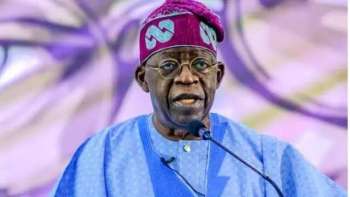
The opposition party accused President Bola Tinubu’s administration of piling fresh pressure on Nigerians already struggling with soaring living costs.
In a strongly worded statement signed by its National Publicity Secretary, Bolaji Abdullahi, the ADC said the rising petrol price was triggering a chain reaction across the economy.
“President Tinubu has turned the petrol pump into an instrument of punishment for everyday Nigerians,” the party declared.
According to the ADC, the impact is being felt far beyond filling stations, with higher fuel costs feeding into transportation, food, electricity, education and business expenses.
‘NO MORE HOLES LEFT’
The party also cited reports of private schools increasing fees by 30 to 40 per cent, arguing that most parents have not seen comparable increases in their incomes.
“Parents are not earning 40 per cent more,” the ADC said, pointing to the simultaneous rise in fuel, food, rent, transportation and education costs.
The party said school proprietors were also under pressure from higher electricity bills, taxes, fuel costs, rents and salaries.
But it warned that the combined burden was becoming unbearable for households.
“At ₦1,470 per litre, petrol is no longer simply a commodity. It is a Tinubu Tax,” the ADC said.
The party further claimed that some Nigerians are now skipping meals, withdrawing children from school, delaying medical treatment and shutting down businesses because of mounting costs.
“Under Tinubu and the APC, Nigerians have been tightening their belts. Now, there are no more holes left, and people have started to choke,” the party said.
‘REFORM IS NOT WORKING’
The ADC also attacked the government's economic reform programme, arguing that policies that increase hardship without corresponding improvements in household incomes cannot deliver meaningful relief.
“A reform that continuously makes the people poorer is not working,” the party declared.
It accused public officials of demanding sacrifices from ordinary Nigerians while allegedly maintaining extravagant lifestyles at public expense.
“When parents must choose between feeding their children and educating them, the government has failed spectacularly in its most basic responsibility,” the ADC said.
2027 BATTLE LINE DRAWN
With the 2027 presidential election approaching, the ADC sought to draw a clear contrast between Tinubu’s economic policies and the programme proposed by its presidential candidate, Atiku Abubakar.
The party reiterated Atiku’s proposal to restore fuel subsidy while supporting domestic fuel production, saying this would help reduce the cost of transportation, food and production.
“Economic reform must serve the people, not sacrifice them,” the ADC said.
The party also warned the ruling APC not to mistake Nigerians’ resilience for approval.
“Our resilience must not become an excuse for continued cruelty,” it said.
The ADC concluded with a direct appeal to the President:
“Tinubu has had enough time and inflicted enough pain. The people are suffering, businesses are dying, and hope is becoming increasingly expensive. President Tinubu must act now. Don’t push Nigerians to their limits.”
Banks Shut 476 Branches as Nigeria’s Banking Landscape Goes Digital
Nigeria’s banks are rapidly abandoning the traditional banking model, shutting down hundreds of branches and cash centres as customers increasingly move to digital and electronic channels.
Data from the Central Bank of Nigeria show that banks closed a net 476 branches and cash centres between 2022 and 2025, cutting the country’s physical banking network by 8.8 per cent in just three years.
The number of bank branches and cash centres plunged from 5,410 in 2022 to 4,934 in 2025, signalling a dramatic shift away from brick-and-mortar banking.
The contraction has gathered pace in recent years.
Banks closed 37 locations in 2023, followed by a much steeper reduction of 229 locations in 2024. Another 210 branches and cash centres disappeared in 2025.
In effect, more than nine out of every 10 locations lost during the three-year period were closed in 2024 and 2025.
The figures, contained in the CBN’s 2025 Statistical Bulletin for the Financial Sector, cover branches and cash centres operated by commercial, merchant and non-interest banks. The data were sourced from the CBN and the Nigeria Deposit Insurance Corporation.
Lagos bears the biggest hit Lagos, Nigeria’s financial powerhouse, recorded the largest decline.
The state had 1,602 bank branches and cash centres in 2022. That figure dropped to 1,532 in 2023, 1,521 in 2024 and just 1,444 in 2025.
That represents a loss of 158 locations, or nearly 10 per cent, in three years.
Despite the closures, Lagos remains overwhelmingly dominant, accounting for almost 29 per cent of all physical banking locations in Nigeria.
The Federal Capital Territory also suffered a significant contraction. Abuja went from 400 locations in 2022 to 362 in 2025, a decline of 38, or 9.5 per cent.
But some states experienced far more dramatic cuts.
Ekiti lost almost half of its banking locations, falling from 107 in 2022 to just 57 in 2025 — a staggering 46.7 per cent decline.
Enugu lost 44 locations, dropping from 162 to 118, while Oyo shed 41, falling from 237 to 196.
Other notable declines were recorded in Ondo, Plateau, Osun, Cross River and Rivers.
Northern banking centres also feel the squeeze
The contraction was not confined to the South.
Kano, for instance, initially expanded its banking footprint, rising from 164 locations in 2022 to 183 in 2024. But the reversal was sharp in 2025, when the figure crashed to 157.
Kaduna followed a similar pattern. Its locations climbed from 148 in 2022 to 164 in 2024 before falling back to 146 in 2025.
Yet not every state is losing branches.
Delta recorded the strongest expansion among the states highlighted, adding 23 locations and rising from 173 in 2022 to 196 in 2025.
Edo added 10, while Jigawa and Kogi gained six and five locations respectively.
A widening banking divide
The figures expose a striking disparity in access to physical banking infrastructure across Nigeria.
While Lagos had 1,444 branches and cash centres in 2025, Yobe had only 23, Taraba 26 and Zamfara 28.
Bayelsa and Gombe had 31 each, while Ebonyi had 32.
The imbalance underscores how heavily physical banking infrastructure remains concentrated in Nigeria’s major commercial and economic centres.
The bank branch may be losing its battle
The shrinking branch network comes despite the number of banks operating in Nigeria initially increasing.
The country had 32 banks in 2022, 33 in 2023 and 35 in 2024, before the figure slipped slightly to 34 in 2025.
That means the branch closures cannot simply be explained by a shrinking number of banks.
Instead, the figures point to a much bigger transformation: Nigerian banking is moving away from physical locations and towards digital platforms.
The CBN has itself been pushing greater adoption of alternative payment channels, particularly among farmers, traders, small businesses and informal-sector operators who may have limited access to conventional banking services.
Speaking at the 2026 CBN Fair in Lokoja, the Acting Director of Corporate Communications and Investor Relations, Hakama Sidi-Ali, stressed the importance of alternative payment channels in expanding financial access and stimulating economic activity.
The message from the numbers is even clearer.
The era of banking halls on every major street may be fading.
With hundreds of branches disappearing in just three years — and the pace of closures accelerating — Nigeria’s banking industry is betting increasingly on phones, apps, electronic payments and other digital channels rather than physical walls and counters.
For millions of Nigerians, the next bank branch may no longer be a building. It may be sitting in their hands.
Business
In The Spotlight
Editorial:The War Behind the War
Nigeria is building a bigger army. But if the reports of secret talks with Boko Haram are true, Abuja may be fighting a very different war behind closed doors.
Nigeria is preparing for war.Thirty thousand more soldiers. Four new Army divisions. More troops, more formations, more firepower. The message from Abuja is unmistakable: the insurgency will be crushed. But somewhere behind that declaration of war lies a far more uncomfortable possibility. What if Nigeria is also negotiating with the enemy?
That is the question raised by reports surrounding the release of roughly 360 civilians abducted in Borno State after the attack around Ngoshe. The government has not publicly acknowledged a secret ceasefire with Boko Haram. It has also denied allegations that ransom was paid. Those denials matter. So do the allegations.
Because if the reported arrangement is accurate, Nigeria's counterterrorism strategy may be entering a dangerous new phase—one in which the government fights insurgents in the open while talking to them in the shadows. And that is where the real danger begins.
The price of getting people home
For the families of the abducted, there is no grand strategy. There is only one question:Are they alive?
If negotiations helped bring hundreds of civilians home, families are unlikely to complain about the method. They wanted their husbands, wives, children and relatives back.That is the brutal arithmetic of hostage-taking. But governments cannot afford to think only about the hostage in front of them.They must also think about the hostage who may be taken tomorrow.
The allegation of a ₦5 billion payment, if ever substantiated, would therefore be explosive—not merely because of the money, but because of the precedent. If an armed group discovers that kidnapping civilians can produce cash, concessions or a pause inmilitary operations, kidnapping stops being merely a weapon.It becomes a business model. And Nigeria already has too many kidnappers.
The contradiction at the heart of Abuja's strategy
Here is the paradox. President Bola Tinubu is expanding the machinery of war at precisely the moment reports suggest that government-linked actors may have been talking to Boko Haram.
So which is it? War or negotiation? The uncomfortable answer may be: both. And perhaps that is not necessarily irrational.
Governments negotiate when lives are at stake. They gather intelligence through contacts. They explore defections. They communicate with enemies even while fighting them. Military pressure can strengthen a government's negotiating position. Negotiations can save lives while military operations continue elsewhere.
But there is a line between using talks as a tactical instrument and allowing negotiations to become a substitute for strategy.Nigeria must know where that line is.
The ceasefire question
A temporary halt in fighting sounds harmless until you ask what happens during the silence. Insurgents do not necessarily see a ceasefire as surrender. They can see it as breathing space. Time to move fighters.Time to acquire supplies.Time to recruit.Time to reorganise.Time to recover from military pressure.
In an insurgency, a few quiet months can be worth more than a few square kilometres of territory.
That is why the most important question surrounding the reported Ngoshe arrangement is not simply whether fighting stopped.
It is this:What did Boko Haram do while it stopped? If the group used the pause to regroup, then a humanitarian success may have carried a strategic cost.If it did not, then perhaps the negotiations achieved precisely what they were supposed to achieve. Nigeria deserves to know.
Who was talking?
This may be the biggest unanswered question of all. There is no established evidence that President Tinubu personally negotiated with Boko Haram. Claims of a secret presidential deal should therefore not be presented as fact.
But if government representatives did negotiate a truce, somebody authorised those contacts. Somebody decided that talking was preferable to shooting.
Somebody determined what could be offered—and what could not.That chain of authority matters.Because secrecy may sometimes protect an operation.
It should not become a permanent shield against accountability. The government does not need to publish intelligence that would endanger hostages or expose sources.
But Nigerians have a legitimate right to know whether their government has paid terrorists, granted concessions or entered into ceasefires.
The Army is getting bigger. The questions are getting bigger too.
Tinubu's decision to expand the Army reflects the scale of Nigeria's security crisis.Boko Haram and ISWAP remain threats in the northeast. Banditry and kidnapping continue elsewhere. The military is being asked to fight on multiple fronts across a vast country. Thirty thousand additional soldiers will not, by themselves, solve an insurgency that has survived nearly two decades.
More soldiers can provide manpower.They cannot automatically provide victory. And this is where Abuja must be careful.
A government cannot tell Nigerians that terrorism will be defeated while simultaneously allowing armed groups to believe that kidnapping can open the door to profitable negotiations.
That sends two messages at once. One says:We will fight you. The other whispers:But if you take enough civilians, we may talk. For an insurgent organisation, that distinction can be very profitable.
Boko Haram is not the only player
There is another complication. Even if Abuja could reach a workable understanding with Boko Haram, Nigeria's jihadist problem would not disappear. ISWAP remains a separate and formidable force.
The northeast is not a chessboard with two pieces. It is a shifting battlefield of factions, commanders, rivalries and opportunistic alliances.
An agreement with one group can change the balance with another. An insurgent who signs a ceasefire today may defect tomorrow. A faction that loses influence may become more violent.
There are no guarantees in this kind of war. The danger of teaching terrorists the wrong lesson.This is ultimately what Abuja must worry about. Not simply whether a ransom was paid. Not simply whether a ceasefire happened. But what lesson the entire episode teaches.
If the lesson is that civilians can be kidnapped, government officials can be summoned to negotiations, money can change hands and military pressure can be reduced, then Nigeria risks creating an incentive for more abductions.
The country cannot afford that. Nigeria's kidnapping economy is already too deeply entrenched. Every concession to an armed group carries the possibility of becoming an advertisement for the next one.
Perhaps the hardest truth is this.
After 17 years of insurgency, Nigeria may have to confront a reality that governments have repeatedly resisted:There may be no purely military solution. That does not mean surrender. It does not mean rewarding terrorists.It does not mean abandoning military pressure. It means recognising that insurgencies are political, social and economic conflicts as well as military ones.But if Nigeria chooses negotiation, it must negotiate from strength and with clear objectives.
If it chooses war, it must understand what victory actually means. And if it chooses both, Nigerians deserve to know what the rules are.The shadows cannot govern forever. The reported Ngoshe arrangement may ultimately prove to be something very different from the allegations now circulating.
The ₦5 billion claim remains unproven.The alleged ceasefire has not been publicly established by the Nigerian government.
Those distinctions matter. But unanswered questions matter too. Who negotiated? Who authorised it? Was money paid? What concessions were made? Did Boko Haram use the pause to rebuild? And most importantly, what is Abuja's endgame?
Nigeria cannot fight a 17-year war indefinitely while pretending that every problem can be solved by another battalion, another operation and another military communiqué. Nor can it negotiate in secret indefinitely and expect the public to remain in the dark.
President Tinubu is building a bigger Army.
That may be necessary. But a bigger Army is not the same thing as a clearer strategy. The real test is whether Nigeria can use military power, intelligence, diplomacy and negotiation without allowing any of them to become a reward for terrorism.
Because the most dangerous battlefield may no longer be the one where the guns are firing. It may be the one where, behind closed doors, the price of peace is being negotiated.
In The Spotlight
Mixed metaphors: Eating them young
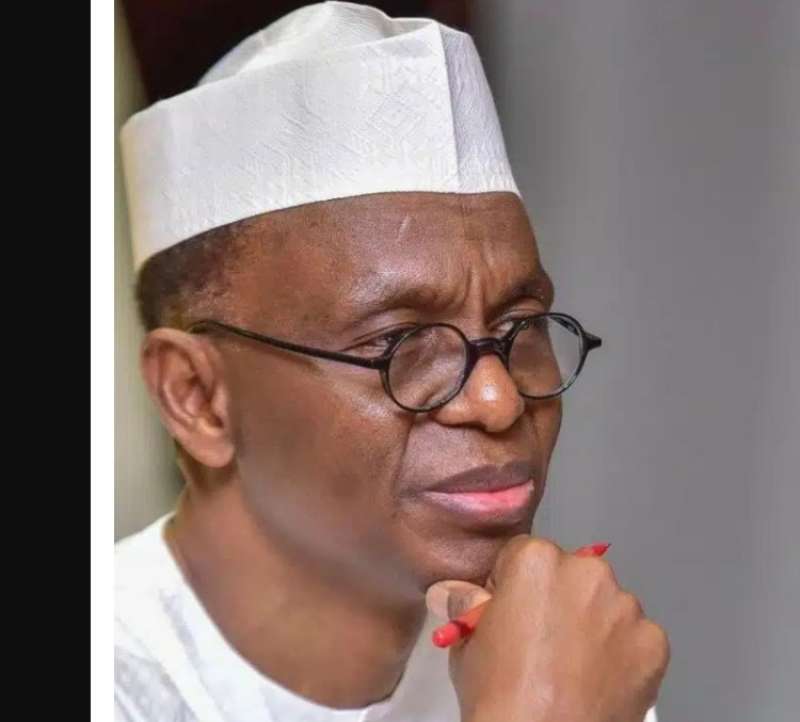
On this page, I have praised former Minister Nasir el-Rufai for his work in the Federal Capital Territory.
As governor, I praised some of his work, including when he fired state teachers. I also criticised him when he became arrogant and presumptuous.
Powerful people tend to misjudge distance, in terms of how long they will remain powerful, as well as the depth of their relevance, measuring how power, once in the hands of others, can remain in their favour.
El-Rufai made both miscalculations. Following over two decades of untouchability in power from Olusegun Obasanjo to Muhammadu Buhari, he has now spent 200 days in pre-trial detention on ICPC and DSS charges.
This should not happen to a citizen, any citizen. But some citizens, when fate grants them the winning lottery ticket, become Cronus, the Titan in Greek mythology who, to maintain his power, swallowed five of his six children soon after birth.
But not Zeus, his youngest son, who miraculously survived and, becoming the supreme ruler of the Olympian gods and the “Father of Gods and Men, “would exact vengeance.
In power, el-Rufai forgot not only the principle of right and wrong, but also the concept of justice.
But it was right there the whole time: on the flip side of injustice. The truth is that wearing glasses to be able to see arms, nobody to see through clouds.
Last Tuesday’s disruption by political thugs of the visit to Benue State of Peter Obi, the presidential candidate of the Nigeria Democratic Congress, is an early reminder of the temptations of power in a Nigerian election year.
The ruling party controls the state, which is in the thick of Nigeria’s insecurity crisis. Its governor, Hyacinth Alia, is a Catholic priest. Having, in 2025, been involved in trying to prevent the same Obi from a humanitarian visit, claiming that his intervention was purely on security grounds, Mr Alia is trying to persuade the country that his are not the hands behind the crude attempt to stop, particularly Mr Obi, from travelling freely and safely in the state.
As Minister Festus Keyamo wisely said, this kind of menace is not a part of our democracy. Mr Alia, show the world your strengths, not your limitations.
Big news: the 2024 Auditor-General’s Non-Compliance report, published last month, identified over N1.34trn in audit lapses.
It found that the National Cash Transfer Office paid N33.751 billion to 3,295,207 households in 35 states in 2023 with no evidence that the money reached genuine beneficiaries.
The Office could not produce REMITA records to authenticate the payments. SERAP has written to President Tinubu demanding a published audit trail and investigation of the flagged N78.8bn in total irregularities.
Similarly, Femi Falana (SAN) has called on the EFCC to investigate and prosecute officials.
Given that we are dealing with a specific regime of governance coated in colours of ruthlessness, it is doubtful that these calls will yield anything.
The truth is that the situation is worse than what we know so far, and so, I have a different call: that Nigerians pay close attention to what is actually a long-running looting spree of our poorest and most vulnerable. There is a scorched-earth assault going on.
I begin in 2019, the start of the second term of the fake anti-corruption champion Muhammadu Buhari:
The Auditor-General’s 2019 report on the FGN Consolidated Financial Statements discovered that 36 MDAs made individual transfer payments,totalingN15,534,467,561.26, without identifying the beneficiaries, ignoring the relevant budget lines for “Transfers–Payment to Unemployed” and “Transfers–Payment to Aged/Vulnerable Group.” The Auditor-General flagged the risk of “diversion of public funds” and “misapplication of funds.”
The 2020 report is more curious. In the MDA-by-MDA budget-performance schedule, the National Social Investment Office shows: Approved Budget N0.00, Supplementary Budget N0.00, Total Budget N0.00, but the actual spending is N275,010,764,595.02! That is, the NSIO somehow recorded spending N275bn with no budgetary authorisation at all.
Surely, somebody has an explanation?
The 2021 Non-Compliance report, Volume II, found under the Ministry of Humanitarian Affairs that N54,630,000,000 in N-Power Batch C1 stipends (the August–December 2021 backlog) was recorded as paid but, per the Auditor-General’s own field visits, “was not actually effected to the beneficiaries.”
The same section found N2,617,090,786 paid for the National Home-Grown School Feeding Programme (COVID-19 period), the Auditor-General recommending full recovery to the Treasury: a combined N58.05bn flagged in that one ministry in that one year.
Surely, somebody has an explanation?
The 2022 Non-Compliance file is titled as Volumes I and II merged, but despite that filename, Volume II appears to be absent, as it excludes Humanitarian Affairs, NSIPA, NCTO or NASSCO, meaning that their work was either not audited at all, or that that specific audit has yet to be published.
Again, and similarly, despite examining the two volumes of the 2023 Non-Compliance report, neither the Ministry of Humanitarian Affairs, NSIPA, NCTO, NASSCO, N-Power, GEEP nor school feeding appears anywhere, although many other agencies were thoroughly audited.
Surely, somebody has an explanation?
That brings us to the 2024 itemised findings SERAP has publicized: N33.751bn in cash transfers with no beneficiary confirmation; N36.744bn paid in December 2023 without prepayment audit; N4.616bn in unsupported expenditure which the Auditor-General says “may have been diverted”; N350.18m in enrolment payments to state coordinators with no supporting documentation; N89.51m for store items never delivered or logged; N17.42m in diesel cash advances with no traceable purchases; and at NASSCO, N2.24bn paid through 158 vouchers without prepayment audit.
These appear to be the patterns that Nigerian MDAs exhibit in their work every year, with vulnerable Nigerians exploited every year.
But the first challenge is for journalists to track Humanitarian Affairs/NSIPA through every audit year to establish the full carnage.
There is another crisis: that despite all of this, a lot of MDAs still fail to submit audited accounts to the Auditor-General, representing one of Nigeria’s worst accountability challenges. This is a problem that worsened significantly under the Buhari administration despite his anti-corruption rhetoric. According to the Auditor-General, the 2016 audit year saw the highest number of non-submissions (324) in modern Nigerian history: more than double the previous 22-year high of 148. In 2016-2017 alone, 436 agencies failed to submit accounts. Think about that.
President Bola Tinubu is in the middle of a three-week foreign trip, departing without formally informing the National Assembly or handing over to Vice President Shettima, violating the constitution.
For a man who is seeking a second term of office, this is a stark reminder of how little the rules, or for that matter, Nigeria, really matter to Mr Tinubu. Keep in mind that when he headed north, Mr Shettima headed south, to Angola.
The general debate of the 81st United Nations General Assembly will begin on 22 September. Mr Tinubu is scheduled to speak the following morning.
At a time of chaos and doubt in his leadership, and in democracy under his watch, he will confront the theme: “Restoring trust, managing transformation: a United Nations that delivers for all.”
By Sonala Olumhense