













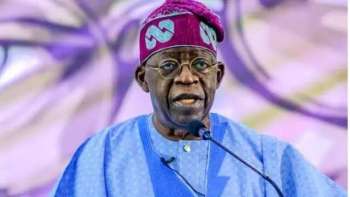







Suspended Governor of the Central Bank of Nigeria, Mallam Sanusi Lamido Sanusi on Sunday issued a lengthy response to the series of allegations levelled against him by the Financial Reporting Council of Nigeria (FRCN).
After identifying all the allegations against him one after the other and explaining his innocence, Sanusi expressed hope that, having painstakingly provided detailed explanations backed by verifiable documents, President Goodluck Jonathan will find the response satisfactory, and in line with his adherence to fairness and justice, revisit and redress his suspension.
He also expressed his desire for the president to apply the same rationale and rigour to other agencies of the Federal Government that have had serious allegations and queries levelled against them, and presume upon them to provide responses and explanations with the same level of clarity and transparency.
Sanusi’s full statement is hereby reproduced below:
I am compelled to make this public statement to address the various allegations levied against the Central Bank of Nigeria (CBN) and cited as the reasons for my suspension from office as the Governor of the CBN on the 19th of February 2014.
As a matter of record, the allegations were made in the following documents:
Briefing Note of the Financial Reporting Council of Nigeria (FRCN) dated 7th June 2013, Ref: PRES/188/T&I/89 to His Excellency, President Goodluck Ebele Jonathan [the Briefing Note];
The Letter of Suspension dated 19th February 2014, which I received from the Office of the Secretary to the Government of the Federation; and
The petition dated 9th February 2014 by Mr Erastus Akingbola.
However, before I go into the above issues, let me reiterate for the records, the achievements of the CBN during my tenure as the Governor:
The Record
Firstly, let me state that I have been extremely fortunate to have had a solid and supportive team led by the Deputy Governors and supported by the Departmental Directors, as well as thousands of hardworking and dedicated staff who must be given the credit for all that the CBN has achieved. I would also like to acknowledge for the record, the foundation laid by my predecessor, Professor Charles Chukwuma Soludo, in a number of areas. The CBN Act, 2007, which he championed, established the CBN as a truly autonomous entity of the Federation, and made it possible for us to take the difficult decisions necessary for restoring and maintaining macroeconomic stability. The FSS 2020 and PSV 2020 documents provided the principal strategic roadmaps that led to many of the innovations in payment systems, non-interest banking, financial inclusion, the Asset Management Corporation, IFRS, Risk-based Supervision, and the like.
Indeed, it will be impossible for me to review almost five years of revolutionary change made possible by the work of thousands of employees in the CBN in collaboration with other Regulators, Banks and Other Financial Institutions and Government Ministries in this press statement. However, I will mention a few of the key highlights.
On monetary policy, the Bank has improved the institutional framework for policy-making. A properly constituted Monetary Policy Committee (MPC) with a clear mandate for maintaining stability has been established. The MPC has been supported by improvements in research, data and forecasting capacity, and we have also paid attention to clear communication of our objectives to the market. As a result, headline inflation has remained below 10 per cent since January 2013, from a peak of 15.1 percent and 13.9 percent in 2008 and 2009 respectively. Core inflation declined from 11.2 per cent in December 2009 to 7.9 percent in December 2013, while food inflation maintained a downward trend from 15.5 percent in December 2009 to 9.3 percent in December 2013. In addition to the conventional liquidity management products, the Bank approved financial products to manage liquidity in non-interest financial institutions. The CBN also promoted the formation of the financial Markets Dealers Quotations Over–the-Counter (FQDM OTC) Plc as a self-regulatory OTC operator.
In the area of safeguarding the value of the local currency and maintaining stability in the foreign exchange market for the overall sustenance of macroeconomic stability and growth, the CBN over the period has successfully maintained a stable exchange rate regime and a robust external reserve position conducive to sustainable growth and development.
On the Banking System, I was appointed Governor in the middle of a global financial crisis when the Nigerian banking system was on the verge of collapse. The Bank moved swiftly to remove the managing directors and executive directors of the banks where major corporate governance failures were discovered, provided liquidity support, pioneered the setting up of the Asset Management Corporation of Nigeria (AMCON) to purchase non-performing loans, recapitalize the banks and pilot a process that led to mergers and acquisitions, as well as recapitalization of all the weak and failing banks. As a result, all financial soundness indicators – Capital Adequacy, Asset Quality, Liquidity and Profitability ratios – were normalized. As a result of the work by the Bank, not a single depositor or creditor lost money in any Nigerian bank during or after the financial crisis.
In addition to the quantitative measures, we broke up universal banks and encouraged the setting up of specialized banks (including the first Non – interest Bank in the Country’s history), pushed for the adoption of IFRS and Basel 3, enhanced risk-based supervision, issued Competency Guidelines for the staff in the banking industry, established a Consumer Protection Department and developed a Financial Inclusion Strategy and Roadmap, among others for the CBN.
The Bank implemented policies aimed at reducing the excessive use of cash in the system to ensure safety, improve efficiency and curb money laundering. The transformation of NIBSS, the insistence on interoperability of channels, encouragement of electronic banking, the licensing of Mobile Money Operators, the Agent Banking and tiered-KYC frameworks have all led to rapid growth in volume and value of non-cash transaction and enhanced financial inclusion.
The Bank has played its leadership role in ensuring industry compliance with environmental sustainability and governance standards, including a strong focus on women and the handicapped.
The CBN in the last five years has taken a leading role in providing long-term low-cost funding to priority sectors of the Nigerian economy in a bid to help in bringing to reality the Transformation Agenda of the government of your Excellency. We have provided these funds at single-digit interest rates to micro, small and medium enterprises, as well as to companies operating in the power, aviation, and agricultural sectors of the economy, and also to large industrial enterprises with potential for structural transformation.
The Bank has invested in human capital, improved staff welfare and attracted and retained specialized skills in the areas of Banking Supervision, Information Technology, Shared Services and Risk Management.
On Financial Performance, the Bank has in the last five years kept a lid on overheads and cost of currency management. As a result, the Bank has continued to produce sterling results and contributed substantially to the Federal Budget. In the five years, 2009 – 2013, the Bank contributed N376 billion to the Federal Budget as Internally Generated Revenue (IGR). Based on 2012 financials alone, we paid N 80 billion to the Ministry of Finance. On the basis of the 2013 results and at the request of the Coordinating Minister of the Economy (CME), we paid N 159 billion to the Ministry of Finance in February this year; the same month the audited accounts of the CBN were approved by the Committee of Governors (COG). Indeed, due to the precarious position of Government finances, the CBN in February 2014, upon the request of the CME, gave the Ministry a further ‘Advance IGR’ of N 70 billion in anticipation of 2014 profits.
May I add that, in 2008, the year before my appointment, the CBN contributed N8 billion to the Federation Account. Although the Bank is not a profit-centre, in the first four years of my term, the Bank alone contributed 75 percent of the total IGR paid by MDAs leading to commendation by the House Committee on Finance at several Public Hearings.
Recognitions
As a result of these achievements of my colleagues and staff, we received numerous recognitions consistently throughout my tenure from highly-regarded publications. These awards are based on a competitive process where analysts and economists rank Central Bank Governors across regions and the globe.
In 2010, The Banker Magazine, a publication of Financial Times in London, named me Best Central Bank Governor in the World and Best in Africa. At the Annual World Bank/IMF Meetings, Emerging Markets, a publication of Euromoney Institutional Investor named me Best Central Bank Governor in Sub-Saharan Africa for 2009, 2010 and 2012. The African Banker Magazine named me Best Central Bank Governor in Africa, 2012. This is in addition to being named Forbes Africa Person of the year 2011 and listed by TIME as one of the 100 most influential people in the world, 2011.
I have always regarded these honours not as personal accolades, but as a tribute to our nation and the committed and resourceful women and men of CBN.
Response to the allegations in relation to my suspension
On Wednesday 12th March 2014, I submitted a Memorandum to His Excellency, Mr President, with supporting documentation, effectively addressing all the allegations contained in the FRCN Briefing Note, the Letter of Suspension and the Akingbola Petition.
Having submitted my response to the President, I am further compelled, following the recent press briefing and comments by the Senior Special Adviser to the President on Media, as well as numerous other references to the allegations in both local, international and online media, to put to the public my responses, in the interest of transparency, accountability and my responsibility to the Nigerian people. Let me also state that I saw the FRCN “Briefing Note” for the first time when it was attached to the suspension letter. At no time was this report sent to the CBN either by the President or the FRCN for comments or explanations. As for the Akingbola petition, it is a rehash of baseless allegations he has been making since 2010 which apparently he must have been asked to reproduce on February 9, ten days before the suspension. It is indeed strange that the CBN Governor can be suspended based on allegations written by a man who ran his bank into the ground and against whom judgement has been obtained in a London court, and who furthermore is facing criminal prosecution at home for offences including criminal Theft.
A careful examination of the allegations contained in the FRCN Briefing Note to Mr President, will show that each of the allegations could easily have been resolved by a simple request for clarification or more careful review. There is no doubt that if the CBN had received the Briefing Note, which was prepared in June 2013, all the misconceptions, misrepresentations and erroneous inferences contained therein would have been cleared.
I am publishing these responses to enable the general public see that each and every allegation levelled against the CBN under my leadership is false and unfounded, and that many of the allegations were malicious and fabricated, having been designed to mislead the President into believing that the Management of the Central Bank was guilty of misconduct and recklessness.
Having provided detailed explanations, backed by verifiable documents, it is my sincere wish that His Excellency, Mr President, in line with his adherence to fairness and justice, will apply the same rationale and rigour to other agencies of the Federal Government that have had serious allegations and queries levied against them, and prevail upon them to provide responses and explanations with the same level of clarity and transparency.
In closing, I would like to place on record the dogged professionalism and patriotism of the staff of the CBN. They have, over the years, conducted themselves very creditably, and discharged their duties with the highest integrity.
* * * * * * * * * * * * * * * * * * * * * * * * * * * * * * * * * *
Memorandum Responding to THE FRCN ALLEGATIONS
Corporate Governance
Briefing Note Allegation 1: that there is weak corporate governance at the CBN on account of the fact that the office of the Governor is fused with that of the Chairman of CBN’s Board of Directors.
Response:
This allegation ignores the fact that global best practice is that the Governor of the central bank is the Chairman of the Board of Directors of the central bank. See Annexure A, which shows the composition of the Board of Directors of central banks in over 55 different countries.
Alleged Fraudulent Activities
Payments to NSPMP
Briefing Note Allegation 2: that the CBN’s breakdown of “Currency Issue Expenses” for 2011 and 2012 indicated that it paid the Nigerian Security Printing and Minting Plc (NSPMP) N38.233 Billion in 2011 for printing of banknotes, whereas the entire turnover of NSPMP was N 29.370 Billion.
Response:
The expense item of N38.233 Billion to NSPMP was made up as follows:
N28.738Billion payment to NSPMP in 2011;
N6.587Billion accrued liability in 2011 but paid in 2012 when deliveries were received; and
N2.829Billion audit adjustment journal entry into the account at the end of 2011 in respect of prepayments to NSPMP.
See Annexure B for the evidence of payment to the NSPMP. Evidently, the difference between the numbers in the financial statements of CBN and NSPMP is a simple reflection of timing differences between recognition of expenses by the CBN and income recognition by the NSPMP, with both entities applying conservative accounting policies.
Charter Fees
Briefing Note Allegation 3: that the CBN made fictitious payments to (a) Emirate Airlines: N0.511 Billion which allegedly does not fly local charter in Nigeria; (b) Wing Airline: N0.425 Billion which allegedly is not registered with the Nigerian Civil Aviation Authority (NCAA); and (c) Associated Airline: N1.025 Billion which allegedly did not have a turnover of up to a billion naira in 2011.
Response:
The CBN neither engaged, paid nor claimed to have paid Emirates Airlines. Rather, the CBN engaged and entered into an Air Charter Services Agreement with Emirate Touch Aviation Services Limited, which is a local Nigerian charter service company. A simple enquiry by FRCN would have clarified and avoided this misrepresentation.
With respect to Wings Aviation Limited, the CBN contracted Wings Aviation Limited, which changed its name to Jedidiah Air Limited on 21 August 2009 but only notified the CBN of the change on 28 February 2012. Please, see Annexure C for the letter from Jedidiah Air Limited notifying the CBN of the change of name. Here also, a simple enquiry by FRCN would have made this clear.
With respect to Associated Air Limited, the CBN did in fact pay a total of N1.025 Billion to Associated Airline Limited. See Annexure D for the schedule of payments made to Associated Airline Limited. It is worth stating that the CBN is not responsible for how the company reports its turnover.
Deposit for Shares in Bank of Industry (BoI)
Briefing Note Allegation 4: that the CBN is yet to receive the share certificate for investments made in the Bank of Industry (BoI) since September 2007 and that the leadership of the CBN was not worried about the delay.
Response:
On 20 August 2009, shortly after I assumed office, I directed that a reconciliation exercise be carried out by the CBN on all its investments in parastatals and companies. Thereafter, the CBN wrote various letters to the Bank of Industry requesting for its share certificates. See Annexure E for the letters from the CBN requesting for the certificate.
On 20 September 2009, the BoI wrote to the CBN explaining that the delay in the issuance of the share certificates was as a result of the BoI seeking a concession on the payment of stamp duty and other statutory fees from the Corporate Affairs Commission and the Federal Inland Revenue Service (FIRS) with respect to the investment by the CBN and the FMF. See Annexure F for the letter from the BoI. Also find attached the letter dated 21 February 2013 forwarding the Share Certificate as Annexure G as well as the certificate for the Debenture as Annexure H.
It is evident that as at the time the FRCN Briefing Note was written, the share certificate and debenture certificate were already in the possession of the CBN. A simple check by the FRCN would have answered the query.
Currency Issue Expenses
Briefing Note Allegation 5: that the expenses made by the CBN on account of currency issues and sundry currency charges for the years 2011 and 2012 were identical and therefore difficult to understand.
Response:
It is incorrect to say that the expenses in 2011 and 2012 were identical. The sundry currency charges amounted to N1.68 Billion in 2011 and N1.87 Billion in 2012. This expense related to amounts paid to Travelex under an agreement to import foreign exchange for licensed BDCs. On the other hand, Currency Issue Expenses totalled N1.15 Billion in 2011 and N1.28 Billion in 2012, relating to expenses borne by the different branches and currency centres of the CBN in the movement and handling of cash.
Facilities Management
Briefing Note Allegation 6: that the CBN’s leadership uses this head of expense (Facilities Management) to capture what ordinarily should have been accounted for as their benefits-in-kind for tax purposes. It also alleges that this head of expense is used for ‘fraudulent activities’ based on the inclusion of items such as “Profit from sale of Diesel”.
Response:
The CBN outsources the management and maintenance of its landed properties across the 36 States of the Federation and the FCT. This involves three service areas: engineering services, building services and environmental services. These are operational costs relating principally to head offices, branches, currency centres and training institutes.
On the specific allegation of ‘fraudulent activities’, based on profits from the sale of diesel, it should be noted that the CBN’s Facilities Management Agreements clearly include the supply of diesel for the operation of generators to power CBN offices in 51 locations across the 36 States and the FCT. The Diesel is paid for at pump price, while overhead and profit at 10% is paid to the service providers. This overhead and profit is presumably what the FRCN erroneously regarded as “profits from the sale of diesel”. These profits do not go to the CBN but to the service providers, which is why they are an “expense item”. The CBN does not operate in any sector of the petroleum industry.
Fixed Assets Clearing Account
Briefing Note Allegation 7: that the expenses under the Fixed Assets Clearing Account comprise properties acquired by the CBN without any expectation to derive future economic benefits and are written off by the CBN on a yearly basis.
Response:
Fixed Assets Clearing Account is used by the CBN to record the procurement of fixed assets, physical items and projects-related expenditure for the CBN, using the IT application Oracle ERP. However, some items, which do not qualify as fixed assets under the capitalisation policy of the CBN, are sometimes posted into this account.
The transactions are periodically reviewed for the purpose of capitalizing those which qualify under the Capitalization Policy and posting such to the respective Fixed Asset Account and Fixed Asset Register with tag numbers. All other assets which do not qualify are expensed through income and expenditure accounts at the end of the year.
Operation of Foreign Bank Accounts
Briefing Note Allegation 8: that foreign bank accounts that were closed down were still operational in the General Ledger for over six months after the accounts had been confirmed closed by the offshore banks.
Response:
The balances on these accounts simply reflected the fact that the process of the transfer of gains and losses on them had not been concluded, hence their existence in the General Ledger. The process of closing the accounts has since been concluded and the journals evidencing closure are available in the CBN.
Unreconciled Real Time Gross Settlement Clearing Account
Briefing Note Allegation 9: that the Real Time Gross Settlement (RTGS) Account had longstanding unreconciled items which could not be substantiated.
Response:
These items resulted from epileptic operations of the RTGS system due to frequent system downtime, which in turn resulted in failure to seamlessly effect funds transfer. These items have since been reconciled and we have put in place an upgraded and more robust RTGS system, which would minimise reoccurrence.
Missing Stockpiles of Foreign Currency
Briefing Note Allegation 10: that the external audit revealed debit/credit balances of sundry foreign currencies without the physical stock of foreign currencies at the CBN Head Office.
Response:
Generally, losses or gains may arise out of the account balances, which in turn, may be occasioned by exchange rate differentials. In either event, once crystalized, the net position is then posted to the Foreign Assets Revaluation Account. As such, as at 20 February 2014, there was no physical stock of currency missing at the CBN.
Alleged Wastefulness
Briefing Note Allegation 11: that the CBN has been wasteful in its expenditure incurred in the course of 2012.
Response:
This allegation is clearly at variance with the reality of the financial performance of the CBN under my leadership. For example, in the year 2008, just before I took over office at the CBN, the contribution of the CBN to the Federation Account was N8Billion. Based on the 2012 annual accounts, our contribution rose tenfold to N80Billion, while in 2013, our contribution, based on the audited accounts, was N159Billion.
It is noteworthy that in the 5 years of my tenure as CBN Governor (2009 – 2013), the CBN has contributed N376Billion to the Federal Budget as IGR (Internally-Generated Revenue). Indeed in 2012, the House of Representatives Committee on Finance publicly commended the CBN for being the highest contributor of revenues to the FGN among MDAs - accounting for 75% of the total IGR contributed by MDAs between 2009 and 2012. The CBN has been able to achieve this through prudent management of costs, including currency expenses and overheads. For example, we brought down currency expenses from N50.8 Billion in 2009 to N29.08 Billion in 2012.
It is worthy noting that the Ministry of Finance has already received its IGR from the CBN in full, based on our 2013 accounts and the Ministry even requested and received an advance of N70Billion in anticipation of surplus that is yet to be earned for 2014. With this level of prudent financial performance, it is puzzling to imagine the basis for the levied allegation of “Wastefulness”. It must be underscored that central banks all over the world are not considered as profit centres. The primary task of the CBN is the attainment of price stability rather than revenue generation. However, the CBN under my leadership has strived to deliver on its key mandate, while also maximising revenues for government.
Promotional Activities
Briefing Note Allegation 12: that the sums expended on promotional efforts of the CBN in 2012 were too high.
Response:
The allegations do not suggest that proper procedure was not complied with in making the referenced expenditure. The Board of the CBN approved all the promotional expenses.
In the year under review, 2012, the CBN initiated several reforms and policies in the execution of its statutory mandate of promoting a sound financial system in Nigeria. Some of these policies included:
the introduction of the Cashless Lagos Initiative and mobile banking;
the Power and Aviation Intervention Fund (PAIF) campaign, for which the FG took credit. The PAIF campaign helped to stimulate growth in the power sector and raise investor confidence generally;
the National Microfinance Development Strategy; and
the Nigerian Incentive-Based Risk Sharing System for Agricultural Lending (NIRSAL) and the Commercial Agriculture Credit Scheme (CACS), which supported the FG’s renewed focus on the development of agriculture as a major income earner for the country.
Essentially, what are characterized as ‘promotional’ were actually necessary education, enlightenment and awareness campaigns and conferences on initiatives which were, and remain, essential to economic growth, expansion of financial inclusion and the achievement of the policy objectives of the CBN and the FG.
Training & Travel Expenses
Briefing Note Allegation 3: that CBN’s expenses in relation to training and travel went up from N7.65 Billion to N9.24 Billion.
Response:
In 2012, the Board of the CBN took the strategic decision to invest in the development and training of CBN staff across all departments. We trained our staff in the most prudent manner possible and this led to the outstanding achievements recorded by the CBN during my tenure. We had to send CBN staff to international finance and regulatory institutions for training; and overseas training comes at a steep cost.
Furthermore, in 2012, to match the increased need for bank supervision, CBN staff strength was increased. This further necessitated orientation and other training programmes to bring the new entrants up to speed with the CBN policies and practices.
Expenses on ATM Offsite Policy Change
Briefing Note Allegation 14: that expenses on the ATM offsite policy change came to N1.045 Billion.
Response:
Prior to my appointment as the CBN Governor, the CBN had initiated a policy of increasing accessibility to financial services through the use of ATMs. This was geared towards ensuring financial inclusion for all Nigerians. To achieve this, the CBN licensed independent ATM deployers (IADs).
However, it soon became apparent that these IADs had neither the capital nor the capacity to roll out ATMs and manage them at a rate consistent with our cashless Nigeria ambitions, and that a roll-out on the scale envisaged would require allowing banks to deploy ATMs outside their branches. As a result of this change in policy, the IADs incurred losses due to prior investments made based on the previous policy.
It was therefore in the interest of equity and fairness that the CBN agreed to negotiate some compensation payable to the IADs after verification of claims of the IADs by the CBN. The verification process resulted in the CBN paying only about 40% of the original claims of the IADs.
The implementation of the policy of increasing accessibility to financial services has been very successful with immense benefits to the country. It has led to an increase in ATM penetration and efficiency of the payment system along with all other benefits associated with this channel.
Expenses on Non-Interest Banking
Briefing Note Allegation 15: that the expenses on Non-Interest Banking went up from N0.977 Billion in 2011 to N1.359 Billion in 2012 and speculation was made as to whether this had any relationship with the CBN’s investment in the International Islamic Liquidity Management Corporation (IILMC).
Response:
For the record, this expense item is not connected with the investment of the CBN in the IILMC. As such, there is no basis to make such an assumption. Rather, the item relates partially to the CBN’s specialised and non-interest banking policies and includes other expenses of the Financial Policy and Regulation Department such as (a) consolidated supervision; and (b) Consultancy fees for the adoption of IFRS & Basel II/III.
Expenses on Private Guards and Policemen
Briefing Note Allegation 16: that the CBN’s expenses on Private Guards and Lunch for Policemen went up from N0.919 Billion in 2011 to N1.257Billion in 2012.
Response:
In 2007 (before my tenure), the CBN adopted a policy to outsource non-core functions, including security services. This decision enabled the Bank to focus on its statutory mandate and to reduce its overheads. Accordingly, the CBN retained the services of about thirteen (13) private security companies to provide access control and security check services. In 2012, the CBN budgeted N600 Million for security services but spent N582.2 Million on private guards. See Annexure I (A-B) for the breakdown of the costs incurred in this regard.
To complement the efforts of private guards, the CBN also requested the services of security agencies, in light of the increased security challenges, especially the activities of the Boko Haram terrorist group. These security personnel were engaged on a daily basis; and were attached to (x) senior CBN officials; (y) special assignments such as security coverage for currency movements; (z) static guard duties at the bank’s premises nationwide, and other sundry engagements. About 2,406 Policemen are currently deployed on a daily basis to various branches and other locations of the CBN. These security personnel were paid a daily lunch and transport allowances totalling N675.02 Million in the year under review.
Project Eagles
The Briefing Note Allegation 17: that the expenses of the CBN on Project Eagles went up from N63 Million in 2011 to N606 Million in 2012.
Response:
Under Project Eagles, the CBN caters for all expenses incurred in the course of an internal restructuring of the CBN on the understanding that central banking, by global standards and best practice measures, is an ever-evolving enterprise, with constantly changing requirements and frameworks that require adaptation.
In 2012, the expenses on Project Eagles included the following internal restructuring initiatives: Strategy Execution Framework Project, Transformation of the Procurement and Support Services Department, Transformation of the Finance Department and the NIPOST PPP Project in collaboration with the Ministry of Communication for the purpose of using NIPOST locations as outlets for our Financial Inclusion Strategy.
Project Eagles was carefully designed, well budgeted for and was approved by the Board. The objectives are being achieved in light of the improved efficiency of the CBN.
Newspapers, Books & Periodicals
Briefing Note Allegation 18: that the expenses of the CBN on newspapers, books and periodicals (excluding CBN’s publications) went up from N1.670Billion in 2011 to N1.678Billion in 2012.
Response:
The CBN’s peculiar status as a regulator underscores the need for its staff to be informed as to every development that has a bearing, however tangential, on the object and functions of the CBN in the economy. The expenses incurred were made in subscriptions for, and acquiring, local and foreign journals, magazines and periodicals for the CBN. These educational and information material are directly useful for the operations of the CBN. The CBN increased the number of employees entitled to access to newspapers, Books and periodicals.
Legal & Professional Fees
Briefing Note Allegation 19: that the CBN paid excessive legal and professional fees of N20.202 Billion in 2011.
Response:
The CBN, like any other public entity, is not immune from liabilities that arise from judgments and orders of the Nigerian courts. The referenced N20.202Billion spent under this head covered the CBN’s judgment debt liabilities in the year under review.
Of particular reference is the judgment of the Supreme Court in the case of Amao v the Central Bank of Nigeria, [SC 168/2007] delivered on 21 May, 2010, wherein the apex Court directed that the CBN pay employees of the Bank who had retired prior to 2000, pension under the harmonised structure introduced by the FG. Note that the negotiated litigation liability that arose from the above-specified matter was approximately N19.8Billion. See Annexure J for the judgment of the Supreme Court in question.
Reduced Expenses on Ethics & Anti-Corruption
Briefing Note Allegation 20: that the CBN, under my watch, reduced its expenditure on Ethics and Anti-corruption and this reduction is purportedly an instance of ‘financial recklessness and wastefulness’.
Response:
In response to the need to improve ethical and best practice standards in its operations to bring it at par with international standards and the code of conduct requirements, the CBN expended N34Million in 2011 to develop the Code of Business Ethics and Compliance (COBEC) as well as the Code of Conduct for staff, the implementation of which spilled over into 2012. This explains why the expenditure dropped from N34 Million to N18 Million.
Auditor’s Fees
Briefing Note Allegation 21: that the CBN paid an additional N140 Million over and above the agreed fees for the external auditors.
Response:
The 2012 financial statements of the CBN stated that the amount paid to the two firms of external auditors for the 2012 financial year was N200Million. The subsequent graduating revision of the fee was to the sum of N230Million effective from 2013.
The N140Million purportedly paid to the external auditors as “additional fees”, was paid as reimbursement of the expenses incurred by these firms in the execution of their mandate as external auditors of the Bank for previous audit exercises. See Annexure K for evidence of payments made to the auditors. Payment of reimbursables is a standard contractual practice when dealing with professional service firms.
Alleged Abuse of Due Process
The MoU for the Banking Sector Resolution Cost Sinking Fund
Briefing Note Allegation 22: that the CBN issued treasury bills using the money in the Banking Resolution Costs Sinking fund (Sinking Fund) without the constitution and approval of the Board of Trustees as required under the MOU signed by the CBN and all the deposit money banks operating in Nigeria.
Response:
The contributors to the Sinking Fund are the CBN and all deposit money banks in the country. All the parties agreed at Bankers Committee that the monies contributed should be invested in treasury bills for safety. The CBN, as custodian, simply implemented that agreement. The board of trustees for Sinking Fund has not been constituted as the legal framework for the Sinking Fund i.e. the Banking Sector Resolution Cost Fund Bill is still pending before the National Assembly.
It should be noted that AMCON redeemed its due bonds on 27 December, 2013 from this account.
Write off of N3.85 Billion Loan
Briefing Note Allegation 23: that the leadership of the CBN wrote-off loans supposedly made to staff members to the tune of N3.85 Billion in 2012.
Response:
The write-off above was not made in favour of CBN staff. Rather the Board of the CBN approved the write-off of the loan as forbearance to Heritage Bank on 17 December, 2010 as part of the process of facilitating its resumption of business as a regional bank. See Annexure L for the board approval given on 17 December 2010.
Overdrawn Accounts by Ministries, Departments & Parastatals
Briefing Note Allegation 24: that the deposit accounts of parastatals have debit and overdrawn positions and that this is contrary to government policy.
Response:
MDAs generally maintain bank accounts with the CBN. Overdrawing of banks accounts is an incidence of banker–customer relationship. However, the CBN experienced some technical problems prior to mid-2012, which affected about 6 of the over 1000 bank accounts maintained by MDAs at the CBN, but the error has been rectified since the middle of 2012. There were some insignificant over drawings on about six (6) of the accounts and the attention of the Office of the Accountant-General of the Federation has been drawn to the matter. See Annexure M for the letter to the Accountant-General and the Accountant-General’s response of January 29th, 2014.
Investment in International Islamic Liquidity Management Corporation (IILMC)
Briefing Note Allegation 25: that the investment in the IILMC was not brought to the attention of His Excellency, Mr President, and was not within the exception in Section 31 of the CBN Act.
Response:
Nigeria, through the CBN, is signatory to the establishment agreement of the IILMC. Before proceeding with the investment, I requested for and obtained the written approval of His Excellency, Mr President, via a letter dated 8 December, 2010. His Excellency, Mr President would recall that he approved this request on 22.12.10. See Annexure N.
The investment in question is permitted by Section 24 of the CBN Act, in pursuance of which it was made as investment of Reserves by the Reserve Management Department of the CBN. If at any point, the CBN wishes to divest from the IILMC, one or more of the member central banks will purchase this investment.
It is worthy of note that in the letter seeking Mr President’s approval for the investment, it was stated explicitly that all the member central banks were treating their investment as part of their external reserves.
It was also alleged that, till the date of the issuance of the Briefing Note (7th June, 2013), the CBN had not received its share certificate for the apex Bank’s investment in the IILMC. However, the said share certificate, dated 6th April, 2013, has indeed been received and is hereby annexed as Annexure O.
Non-adoption of IFRS Standards
Briefing Note Allegation 26: that the CBN did not comply with the IFRS accounting standards in preparing its 2012 financial statements.
Response:
It has been and remains a cardinal policy of the CBN to comply with statutory requirements and policy guidelines of regulators. In recognition of the peculiar nature of the CBN as a central bank and its peculiar responsibilities, its migration to the IFRS would require extended time to comply with the Act.
In view of this reality, I wrote the FRCN via a letter dated 14th February 2013, requesting for a temporary exemption to allow the CBN prepare the 2012 financial statements based on the existing financial reporting framework.
The FRCN waived the requirement for the CBN to comply with the IFRS standards in preparing its 2012 financial statements by its letter of exemption dated 26 February 2013. See Annexure P for the FRCN’s letter.
In January 2010, the published Report of the Committee on the Roadmap for the adoption of IFRS in Nigeria (the Roadmap), allowed Public Interest Entities, in the nature of CBN, to delay the adoption of the IFRS financial statements until 31 December 2013. See Annexure Q for the Roadmap. It is probably for the same reason the FRCN itself did not prepare its audited financial statements in accordance with IFRS for the year ended 2012.
It is worth noting that very few Central Banks in the world are able to comply with IFRS due to a number of factors peculiar to the nature of central banking, especially in the following areas:
Accounting for Change in the value of Gold reserves.
Management of government foreign exchange reserves and exchange rate fluctuations.
Disclosure challenges around monetary policy interventions and its activities as lender of last resort to financial institutions, and guarantor to government borrowing.
Valuation of assets held in foreign currencies.
Challenges around weekly Treasury Bill sales.
Management of years of deficit after surplus has been transferred to the government in the year of surplus.
Funding government deficit financing as enshrined in section 38 of the CBN Act 2007.
Non-Compliance with ITF Act
Briefing Note Allegation 27: that the CBN failed to comply with the ITF Act by not paying the mandatory one per centum of the amount of its annual payroll to the ITF.
Response:
The CBN, at the time, contested in court its obligation to pay one per centum of its payroll to the ITF on the ground that the CBN is not engaged in commerce or industry, which under the ITF Act is the basis for an employer to make payments under the ITF Act.
However, upon further considerations, the matter was amicably settled by the CBN and ITF. The CBN has duly complied with the ITF Act and has paid all levies up to the 2012 financial year. See Annexure R, which bears this out.
AUDITING
Briefing Note Allegation 28: that the joint auditors of the CBN’s financial statement did not certify that the accounts give a true and fair view of the financial position of the CBN as at 31 December 2012.
Response:
Without any iota of evidential proof, and in a most sweeping statement, the FRCN Briefing Note alleged that the joint auditors’ opinion was a technical qualification; that the accounts should not be relied upon for decision-making.
To set the records straight, auditors do not certify accounts but only express opinions on the financial statements.
The joint auditors stated that the CBN’s 2012 financial statements were properly prepared and accorded with accounting policies and the provisions of the CBN Act 2007 and other applicable regulations.
The opinion, as expressed by our auditors, is consistent with what obtains in respect of central banks in a number of other jurisdictions. We enclose by way of example, a sample of opinions relating to the central banks of the United States of America, South Africa and Ghana. See Annexure S. The allegation made by the FRCN in relation to this aspect of the auditors’ report is troubling when viewed in this light.
Non-consolidation of accounts with Subsidiaries
Briefing Note Allegation 29: that the CBN did not consolidate its account with those of its subsidiaries.
Response:
The CBN does not have subsidiaries and the assumption that AMCON is a subsidiary of the CBN is wrong. The shares in AMCON are held by the Federal Government as borne out by Section 2 of the AMCON Act. Furthermore, the accounting reporting period of the CBN is statutory and does not coincide with that of AMCON.
Abridgement of Financial Statements
Briefing Note Allegation 30: that the financial statement was highly abridged, with poor disclosures of transactions and events of a financial nature.
Response:
The financial statement cannot by any stretch of the imagination be described as “highly abridged”. Rather, all transactions in the financial statement were substantiated and were prepared in line with the CBN’s framework with all relevant notes, schedules and disclosures copiously made for clarity.
Non- Challance and AMCON’s Operations
Briefing Note Allegation 31: that AMCON made a loss (after taxation) of N 2,439,701,422,000 (over N 2.4 Trillion) and also had a negative total equity of N2,345,620,364,000 (over N 2.3 Trillion) at the end of 2011. The FRCN alleges that I should have brought it to the attention of His Excellency, Mr President, that a large portion of the AMCON bonds would be due for redemption by 31 December 2013 and that the inability of the Federal Government to fulfil the guarantee may affect the credit rating of Nigeria negatively. In other words, the CBN breached its statutory objects under Section 2(e) of the CBN Act by not drawing His Excellency’s attention to the matter.
Response:
A major achievement of the Central Bank was that the AMCON bonds in question that matured at the end of 2013 were successfully redeemed without any budgetary appropriation or call on the Federal Government to guarantee the repayment as referenced above.
It must be emphasized that AMCON bonds are not instruments issued by the CBN. On that score, it would be most inappropriate and against every known principle of standard accounting convention for the CBN to incorporate full disclosures on the maturity profile of AMCON’s bonds in its audited financial statements (balance sheet and notes).
Rather, in accordance with international best practice, the CBN is only required to disclose in its accounts, the portion of the bonds held by it (the CBN). To this extent, the CBN made appropriate disclosures in the financial statements on the bonds it held as at 31 December 2012. See Annexure T – which is note 6 to the CBN’s 2012 financial statements showing the amount CBN has invested in AMCON bonds.
Non-approval of 2012 financial statement by CBN Board
Briefing Note Allegation 32: that the date of the Board’s approval of the financial statements was not indicated or disclosed and accordingly, the response provided to the President’s request for clarifications indicated that the management letter on the financial statements was yet to be discussed by the Board Audit and Risk Management Committee.
Response:
The financial statements were presented to the board and approved on 26 February 2013. The date of approval was stated clearly on the balance sheet page behind the signature of each of the directors. (See Annexure U for a board approval dated 26 February 2013 approving financial statements). Issues of a material nature requiring adjustments had been fully incorporated into the Financial Statement prior to presentation to the Board.
The items in the Management Letter were suggestions for improvement made by external auditors and these were subsequently considered by the Board Audit and Risk Management Committee and are being implemented by Management on an on-going basis.
Compliance with the PPA
Briefing Note Allegation 33: non-compliance with the provisions of the Public Procurement Act (PPA).
Response:
The only issue that has been raised to the knowledge of the CBN, is that the CBN, over a period in the past, did not obtain ‘Certificate of No Objection’ from the BPP before awarding contracts.
On 11 August 2008 (before my tenure), the CBN wrote to His Excellency, President Yar’adua, requesting for certain exemptions in CBN’s procurement process. See Annexure V. On 20 August 2008, the President gave his approval to the CBN’s application. See Annexure W.
In line with this approval, the CBN continued to approve its contracts in full compliance with the Public Procurement Guidelines, with the only exception that it did not apply for a ‘Certificate of No Objection’ based on the Presidential waiver.
It should be noted that the CBN’s own procurement process is more or less identical to the procurement process under the Public Procurement Act (PPA). Indeed, the BPP has had occasion to write in the past commending the CBN’s commitment to transparency and making recommendations for further improving the process. See Annexure X.
In the course of the CBN interaction with the BPP on this subject, we provided an explanation by way by a letter of 11 August 2013, informing the BPP of the Presidential waiver. After an exchange of correspondences between the CBN and the BPP on this issue, the BPP disagreed that the Presidential waiver constituted an exemption from the requirement to obtain a Certificate of No Objection and insisted that the CBN should start doing so.
The CBN, out of an abundance of caution, immediately began to obtain Certificates of No Objection in respect of subsequent procurements within the stipulated threshold. In this regard, the CBN did obtain Certificates of No Objection dated 17 December 2013, 31 December 2013 and 14 February 2014. See Annexure Y [A-D] for these. It is important to note that the contracts for which these Certificate of No Objections were issued were approved based on the same process that apply to all the other contracts approved by the Bank. This, in itself, is testimony that the Bank has always complied with the provisions of the Act.
It is also important to note that in October 2013, the BPP-appointed consultant (Messrs Sada Idris & Co) also gave the CBN a good bill of health after reviewing the bank’s procurement processes for 2010 and 2011. See Annexure Z. In its final report, the consultant in fact mentioned that the CBN satisfactorily complied with the provisions of the PPA.
Furthermore, the CBN has facilitated compliance with the provisions of the PPA by making it a requirement for entities seeking to access the CBN Intervention Projects Fund, to comply with the PPA and to obtain a Certificate of No Objection to Contract Award, where required. See Annexure AA for the BPP Letter of No Objection of 12 October 2010 in relation to procurements by the Nigeria Police Force.
Unlawful Expenditure on CBN Intervention Projects
Briefing Note Allegation 34: that CBN Interventions in areas like Education, Community, etc. are unlawful.
Response:
A principal focus of the CBN Corporate Social Responsibility (CSR) policy in the last decade (even before my tenure) has been the Educational sector in Nigeria. The CBN Act lists its objects, functions and prohibited activities, and the Board is empowered to approve the budget and formulate policies of the CBN. The Intervention Projects mentioned are CSR interventions that fully comply with the CBN Act and were duly approved by the Board.
It is worth noting that the CSR policy of the CBN is consistent with the activities of many other central banks of developing countries including, Bank Negara Malaysia, the Bank of Namibia, the Bank of Botswana and the Bank of Indonesia.
The Federal Government of Nigeria has been aware, supported and encouraged the CBN intervention projects, in recognition of their positive contribution to development.
During the recent strike by the Academic Staff Union of Universities (ASUU), the CBN intervention projects in universities were an important fulcrum in the settlement negotiations between the FG and ASUU as borne out in the Memorandum of Understanding between the FG and ASUU, where the Intervention Projects were recognised as part of the contributions of the FG to Education in tertiary institutions.
Furthermore, the FG standing committee on the Implementation of Needs Assessment of Nigerian Public Universities requested that the CBN channel a portion of its annual budget to the identified projects. See Annexure BB - The Interim Report of the Technical Sub-committee of the Committee on the Implementation on Needs Assessment of Nigerian Public Universities.
A major aspect of the CBN intervention projects is the Centre for Excellence, which are not merely physical structures. The CBN entered into Memoranda of Understanding with partner Universities to develop a holistic and multi-faceted scheme which includes the establishment of Centres for Excellence under which the CBN would, in the principal areas of Economics and Finance, fund the endowment of Professorial Chairs, create access for Nigerian students to participate in virtual and remote learning with foreign tertiary institutions like Harvard, Princeton, Oxford Universities, and special programs for students of Business and Economics. In this regard, the CBN is in the process of establishing Centres for Excellence across the geo-political zones of the country including:
Ahmadu Bello University, Zaria
University of Nigeria, Enugu
University of Ibadan, Ibadan
Nigeria Defense Academy, Kaduna
University of Lagos, Lagos
University of Maiduguri, Borno
University of Port Harcourt, Rivers
University of Jos, Plateau
Bayero University, Kano
Consistent with our policy of development, upon the instruction of His Excellency, the President, the CBN intervened by paying N19.7 Billion to the Ministry of Police Affairs for the purchase of armoured helicopters and other security equipment.
Also, upon the application of the Secretary to the Government of the Federation, the CBN paid N2.1 Billion for the automation and renovation of the Federal Executive Council Chamber. See Annexure CC.
The CBN also initiated, with His Excellency, the President’s approval, the construction of the International Conference Centre for Nigeria. See Annexure DD.
His Excellency, the President, also requested that the CBN pay N3.2 Billion for the construction of a new counter terrorism centre for the office of the National Security Adviser. See Annexure EE.
The FRCN itself is a beneficiary of the CBN’s intervention policy as the CBN paid the sum of N220 Million to the FRCN and also organised the banking sector, through the Banker’s Committee, to pay N280 Million, totalling a sum of N500 Million, for the construction of the IFRS Academy. See Annexure FF.
All of these requests were duly submitted to the CBN Board of Directors and were duly approved.
It is also important to emphasise that the grants under the Intervention Program were duly budgeted for, and made on a limited and selected basis.
Intervention in National Security: At the height of security uncertainties in Nigeria, the Ministry of Police Affairs petitioned His Excellency, the President, for access to the CBN Intervention Fund. His Excellency approved that this be done in his letter of 6 October 2010 referenced MPA/PSD/S/0243. See Annexure GG. The CBN Board of Directors then reviewed and approved this request. See Annexure HH for the issuance of a grant by the CBN from the Intervention Fund to the Nigerian Police Force, for the procurement of:
Armoured Helicopters,
Armoured Patrol Vans,
Anti-Riot Equipment;
Hand held Communication Equipment.
Akingbola Petition & the N40 Billion Loan Waiver
Allegation 35: attached to the my letter of suspension was a petition written by the former Managing Director of the defunct Intercontinental Bank Plc (ICB now Access Bank Plc)- Erastus Akingbola (Mr Akingbola), on an alleged waiver of a N40 Billion loan to a Nigerian bank.
Response:
Before responding to the allegation, it should be stated that the said Mr Akingbola is a man found by a final judgment of the Courts in England to have been liable for financial improprieties in the management of the affairs of ICB.
In his self-serving petition, Mr Akingbola alleged that the CBN, on my watch, wrote-off a loan in favour of Dr. Bukola Saraki. This is untrue.
The CBN was at no time involved in the decision of ICB (or any other bank for that matter) to write-off its loans. The CBN never gave prior approval to the Management and Board of ICB to write-off any particular loan. It is important to state up-front that all the non executive directors on the Board of ICB were appointed by its shareholders while Akingbola was CEO and they were the majority on the Board that approved the write-offs.
From the submissions of ICB to the CBN, the said loan write-off, involved over 1000 customers accounts, totalling N49.07 billion – including accounts held by companies related to Dr. Bukola Saraki.
It is well known that decisions on loan write-offs in the process of recovering non-performing loans are taken by the management and board of banks in line with their internal credit policies. The outstanding amounts are then written off the books of banks after receiving approval of the CBN. ICB therefore only approached the CBN, after it has completed all its negotiations and agreements with its customers, to seek CBN ‘ No Objection’ approval to write-off the loans. Indeed, after a careful review of the submission by ICB, the CBN initially raised objections to the justifications provided for the write-off of the debts on the accounts related to Dr. Bukola Saraki. See Annexure II.
In response to these objections, the Management of ICB wrote explaining the rationale for the Board decision. (This is also contained in Annexure II). It is important to note that decisions on loan write-offs involve significant exercise of judgement by those involved. Usually a number of factors come into play including whether or not the loan is secured, the value of collateral and if the bank is in a legal position to realise same, the general liquidity in the secondary market and the liquidity position of the bank itself which determines if it is negotiating from a position of strength or weakness. Ultimately, while we may debate these issues, the judgement has to be exercised by those actually managing the bank in the best interest of shareholders and the responsibility lies with them.
In the case of ICB it is well known that the bank was in a grave situation as a result of years of mismanagement by Akingbola. The loans in question were largely loans secured by shares in the capital market and therefore were vulnerable to what is called Market risk. The collapse of the Nigerian capital market following the Global Financial Crisis in 2008 meant that the collateral for these loans had been totally wiped out. The losses suffered by the bank were therefore a result of very bad credit decisions taken by Mr. Akingbola himself which led to the bank taking on huge amounts of risk that crystallised. In this situation all that was left for Management was to minimise its losses and recover as much as it could before the situation got worse.
With specific reference to the ICB loans to companies related to Dr Saraki, the bank’s Management explained that there were four loans totalling N9.489 billion, of which three were margin loans secured by shares and the fourth was secured by real estate. The value of the collateral underlying the Margin loans had been eroded and the bank was compelled to give waivers to make some recovery while still retaining the shares for sale at a future date. It should also be added that the real estate used to secure the non-margin loan were not perfected by the management under Mr. Akingbola – which is another indication of bad credit policies under Mr. Akingbola.
There was no waiver granted to Dr Saraki on the fourth loan as it was paid in full (plus accumulated interest). Of the N9.4 billion, a total of N4.04 billion was repaid, representing a waiver of 57.42 %. Losses on Margin loans were common at this time in the entire industry. To illustrate this, when AMCON purchased margin loans from Intervened banks on December 30, 2010 it offered a premium of 60% above the average price of the shares in the preceding 60 days. In spite of these generous terms AMCON paid an average of only 24.27% of the value of margin loans purchased. Without the premium AMCON would have purchased the loans at 15.17% of their book value. This actually would suggest that the Management of ICB did get a reasonably fair deal for the bank in these circumstances. The best construction we can place on Mr Akingbola’s petition is that he is complaining that the Management that succeeded him could have done a better job of cleaning up the mess he created and left behind.
As for Akingbola’s allegation of fraud, conspiracy, forgery and stealing against Dr. Saraki in connection with Joy Petroleum Ltd, the Central Bank was in the process of collaborating with law enforcement agents involved in the investigations when we received a copy of a letter written by the Honourable Attorney-General and Minister of Justice declaring that these allegations were unfounded and there was no basis in law for any criminal investigation in respect thereof. See Annexure HH. The Central Bank therefore cannot be held in any manner responsible for this decision as this was a position taken by the nation’s chief law officer.
Conclusion
It is now clear that each of the allegations made by the FRCN in the Briefing Note could easily have been resolved upon a simple request to the CBN for clarification or a little more careful review. There is no doubt that if the CBN had received the Briefing Note, which was prepared in June 2013, all the misconceptions, misrepresentations and erroneous inferences contained therein would have been cleared, and the misleading of His Excellency would have been avoided.
It is now my sincere hope that, having painstakingly provided detailed explanations, backed by verifiable documents, His Excellency, Mr President will find the response satisfactory, and in line with his adherence to fairness and justice, revisit and redress the issue of my suspension.
Furthermore, it is my wish that His Excellency, Mr President, will apply the same rationale and rigour to other agencies of the Federal Government that have had serious allegations and queries levied against them, and presume upon them to provide responses and explanations with the same level of clarity and transparency.
In closing, I would like to place on record the dogged professionalism and patriotism of the staff of the CBN. They have, over the years, served this country creditably, loyally and diligently.
I hereby restate my enduring passion for, and commitment to, our great country Nigeria.
Signed:
Sanusi lamido sanusi, CON
Governor, Central Bank of Nigeria
 |
|

Petrol Hits ₦1,470: ADC Warns ‘Nigerians Are Choking’
Nigerians are being pushed deeper into economic hardship as petrol prices climb as high as ₦1,470 per litre, with the African Democratic Congress (ADC) warning that families and businesses are being driven to breaking point.
The opposition party accused President Bola Tinubu’s administration of piling fresh pressure on Nigerians already struggling with soaring living costs.
In a strongly worded statement signed by its National Publicity Secretary, Bolaji Abdullahi, the ADC said the rising petrol price was triggering a chain reaction across the economy.
“President Tinubu has turned the petrol pump into an instrument of punishment for everyday Nigerians,” the party declared.
According to the ADC, the impact is being felt far beyond filling stations, with higher fuel costs feeding into transportation, food, electricity, education and business expenses.
‘NO MORE HOLES LEFT’
The party also cited reports of private schools increasing fees by 30 to 40 per cent, arguing that most parents have not seen comparable increases in their incomes.
“Parents are not earning 40 per cent more,” the ADC said, pointing to the simultaneous rise in fuel, food, rent, transportation and education costs.
The party said school proprietors were also under pressure from higher electricity bills, taxes, fuel costs, rents and salaries.
But it warned that the combined burden was becoming unbearable for households.
“At ₦1,470 per litre, petrol is no longer simply a commodity. It is a Tinubu Tax,” the ADC said.
The party further claimed that some Nigerians are now skipping meals, withdrawing children from school, delaying medical treatment and shutting down businesses because of mounting costs.
“Under Tinubu and the APC, Nigerians have been tightening their belts. Now, there are no more holes left, and people have started to choke,” the party said.
‘REFORM IS NOT WORKING’
The ADC also attacked the government's economic reform programme, arguing that policies that increase hardship without corresponding improvements in household incomes cannot deliver meaningful relief.
“A reform that continuously makes the people poorer is not working,” the party declared.
It accused public officials of demanding sacrifices from ordinary Nigerians while allegedly maintaining extravagant lifestyles at public expense.
“When parents must choose between feeding their children and educating them, the government has failed spectacularly in its most basic responsibility,” the ADC said.
2027 BATTLE LINE DRAWN
With the 2027 presidential election approaching, the ADC sought to draw a clear contrast between Tinubu’s economic policies and the programme proposed by its presidential candidate, Atiku Abubakar.
The party reiterated Atiku’s proposal to restore fuel subsidy while supporting domestic fuel production, saying this would help reduce the cost of transportation, food and production.
“Economic reform must serve the people, not sacrifice them,” the ADC said.
The party also warned the ruling APC not to mistake Nigerians’ resilience for approval.
“Our resilience must not become an excuse for continued cruelty,” it said.
The ADC concluded with a direct appeal to the President:
“Tinubu has had enough time and inflicted enough pain. The people are suffering, businesses are dying, and hope is becoming increasingly expensive. President Tinubu must act now. Don’t push Nigerians to their limits.”
Banks Shut 476 Branches as Nigeria’s Banking Landscape Goes Digital
Nigeria’s banks are rapidly abandoning the traditional banking model, shutting down hundreds of branches and cash centres as customers increasingly move to digital and electronic channels.
Data from the Central Bank of Nigeria show that banks closed a net 476 branches and cash centres between 2022 and 2025, cutting the country’s physical banking network by 8.8 per cent in just three years.
The number of bank branches and cash centres plunged from 5,410 in 2022 to 4,934 in 2025, signalling a dramatic shift away from brick-and-mortar banking.
The contraction has gathered pace in recent years.
Banks closed 37 locations in 2023, followed by a much steeper reduction of 229 locations in 2024. Another 210 branches and cash centres disappeared in 2025.
In effect, more than nine out of every 10 locations lost during the three-year period were closed in 2024 and 2025.
The figures, contained in the CBN’s 2025 Statistical Bulletin for the Financial Sector, cover branches and cash centres operated by commercial, merchant and non-interest banks. The data were sourced from the CBN and the Nigeria Deposit Insurance Corporation.
Lagos bears the biggest hit Lagos, Nigeria’s financial powerhouse, recorded the largest decline.
The state had 1,602 bank branches and cash centres in 2022. That figure dropped to 1,532 in 2023, 1,521 in 2024 and just 1,444 in 2025.
That represents a loss of 158 locations, or nearly 10 per cent, in three years.
Despite the closures, Lagos remains overwhelmingly dominant, accounting for almost 29 per cent of all physical banking locations in Nigeria.
The Federal Capital Territory also suffered a significant contraction. Abuja went from 400 locations in 2022 to 362 in 2025, a decline of 38, or 9.5 per cent.
But some states experienced far more dramatic cuts.
Ekiti lost almost half of its banking locations, falling from 107 in 2022 to just 57 in 2025 — a staggering 46.7 per cent decline.
Enugu lost 44 locations, dropping from 162 to 118, while Oyo shed 41, falling from 237 to 196.
Other notable declines were recorded in Ondo, Plateau, Osun, Cross River and Rivers.
Northern banking centres also feel the squeeze
The contraction was not confined to the South.
Kano, for instance, initially expanded its banking footprint, rising from 164 locations in 2022 to 183 in 2024. But the reversal was sharp in 2025, when the figure crashed to 157.
Kaduna followed a similar pattern. Its locations climbed from 148 in 2022 to 164 in 2024 before falling back to 146 in 2025.
Yet not every state is losing branches.
Delta recorded the strongest expansion among the states highlighted, adding 23 locations and rising from 173 in 2022 to 196 in 2025.
Edo added 10, while Jigawa and Kogi gained six and five locations respectively.
A widening banking divide
The figures expose a striking disparity in access to physical banking infrastructure across Nigeria.
While Lagos had 1,444 branches and cash centres in 2025, Yobe had only 23, Taraba 26 and Zamfara 28.
Bayelsa and Gombe had 31 each, while Ebonyi had 32.
The imbalance underscores how heavily physical banking infrastructure remains concentrated in Nigeria’s major commercial and economic centres.
The bank branch may be losing its battle
The shrinking branch network comes despite the number of banks operating in Nigeria initially increasing.
The country had 32 banks in 2022, 33 in 2023 and 35 in 2024, before the figure slipped slightly to 34 in 2025.
That means the branch closures cannot simply be explained by a shrinking number of banks.
Instead, the figures point to a much bigger transformation: Nigerian banking is moving away from physical locations and towards digital platforms.
The CBN has itself been pushing greater adoption of alternative payment channels, particularly among farmers, traders, small businesses and informal-sector operators who may have limited access to conventional banking services.
Speaking at the 2026 CBN Fair in Lokoja, the Acting Director of Corporate Communications and Investor Relations, Hakama Sidi-Ali, stressed the importance of alternative payment channels in expanding financial access and stimulating economic activity.
The message from the numbers is even clearer.
The era of banking halls on every major street may be fading.
With hundreds of branches disappearing in just three years — and the pace of closures accelerating — Nigeria’s banking industry is betting increasingly on phones, apps, electronic payments and other digital channels rather than physical walls and counters.
For millions of Nigerians, the next bank branch may no longer be a building. It may be sitting in their hands.
Business
In The Spotlight
Editorial:The War Behind the War
Nigeria is building a bigger army. But if the reports of secret talks with Boko Haram are true, Abuja may be fighting a very different war behind closed doors.
Nigeria is preparing for war.Thirty thousand more soldiers. Four new Army divisions. More troops, more formations, more firepower. The message from Abuja is unmistakable: the insurgency will be crushed. But somewhere behind that declaration of war lies a far more uncomfortable possibility. What if Nigeria is also negotiating with the enemy?
That is the question raised by reports surrounding the release of roughly 360 civilians abducted in Borno State after the attack around Ngoshe. The government has not publicly acknowledged a secret ceasefire with Boko Haram. It has also denied allegations that ransom was paid. Those denials matter. So do the allegations.
Because if the reported arrangement is accurate, Nigeria's counterterrorism strategy may be entering a dangerous new phase—one in which the government fights insurgents in the open while talking to them in the shadows. And that is where the real danger begins.
The price of getting people home
For the families of the abducted, there is no grand strategy. There is only one question:Are they alive?
If negotiations helped bring hundreds of civilians home, families are unlikely to complain about the method. They wanted their husbands, wives, children and relatives back.That is the brutal arithmetic of hostage-taking. But governments cannot afford to think only about the hostage in front of them.They must also think about the hostage who may be taken tomorrow.
The allegation of a ₦5 billion payment, if ever substantiated, would therefore be explosive—not merely because of the money, but because of the precedent. If an armed group discovers that kidnapping civilians can produce cash, concessions or a pause inmilitary operations, kidnapping stops being merely a weapon.It becomes a business model. And Nigeria already has too many kidnappers.
The contradiction at the heart of Abuja's strategy
Here is the paradox. President Bola Tinubu is expanding the machinery of war at precisely the moment reports suggest that government-linked actors may have been talking to Boko Haram.
So which is it? War or negotiation? The uncomfortable answer may be: both. And perhaps that is not necessarily irrational.
Governments negotiate when lives are at stake. They gather intelligence through contacts. They explore defections. They communicate with enemies even while fighting them. Military pressure can strengthen a government's negotiating position. Negotiations can save lives while military operations continue elsewhere.
But there is a line between using talks as a tactical instrument and allowing negotiations to become a substitute for strategy.Nigeria must know where that line is.
The ceasefire question
A temporary halt in fighting sounds harmless until you ask what happens during the silence. Insurgents do not necessarily see a ceasefire as surrender. They can see it as breathing space. Time to move fighters.Time to acquire supplies.Time to recruit.Time to reorganise.Time to recover from military pressure.
In an insurgency, a few quiet months can be worth more than a few square kilometres of territory.
That is why the most important question surrounding the reported Ngoshe arrangement is not simply whether fighting stopped.
It is this:What did Boko Haram do while it stopped? If the group used the pause to regroup, then a humanitarian success may have carried a strategic cost.If it did not, then perhaps the negotiations achieved precisely what they were supposed to achieve. Nigeria deserves to know.
Who was talking?
This may be the biggest unanswered question of all. There is no established evidence that President Tinubu personally negotiated with Boko Haram. Claims of a secret presidential deal should therefore not be presented as fact.
But if government representatives did negotiate a truce, somebody authorised those contacts. Somebody decided that talking was preferable to shooting.
Somebody determined what could be offered—and what could not.That chain of authority matters.Because secrecy may sometimes protect an operation.
It should not become a permanent shield against accountability. The government does not need to publish intelligence that would endanger hostages or expose sources.
But Nigerians have a legitimate right to know whether their government has paid terrorists, granted concessions or entered into ceasefires.
The Army is getting bigger. The questions are getting bigger too.
Tinubu's decision to expand the Army reflects the scale of Nigeria's security crisis.Boko Haram and ISWAP remain threats in the northeast. Banditry and kidnapping continue elsewhere. The military is being asked to fight on multiple fronts across a vast country. Thirty thousand additional soldiers will not, by themselves, solve an insurgency that has survived nearly two decades.
More soldiers can provide manpower.They cannot automatically provide victory. And this is where Abuja must be careful.
A government cannot tell Nigerians that terrorism will be defeated while simultaneously allowing armed groups to believe that kidnapping can open the door to profitable negotiations.
That sends two messages at once. One says:We will fight you. The other whispers:But if you take enough civilians, we may talk. For an insurgent organisation, that distinction can be very profitable.
Boko Haram is not the only player
There is another complication. Even if Abuja could reach a workable understanding with Boko Haram, Nigeria's jihadist problem would not disappear. ISWAP remains a separate and formidable force.
The northeast is not a chessboard with two pieces. It is a shifting battlefield of factions, commanders, rivalries and opportunistic alliances.
An agreement with one group can change the balance with another. An insurgent who signs a ceasefire today may defect tomorrow. A faction that loses influence may become more violent.
There are no guarantees in this kind of war. The danger of teaching terrorists the wrong lesson.This is ultimately what Abuja must worry about. Not simply whether a ransom was paid. Not simply whether a ceasefire happened. But what lesson the entire episode teaches.
If the lesson is that civilians can be kidnapped, government officials can be summoned to negotiations, money can change hands and military pressure can be reduced, then Nigeria risks creating an incentive for more abductions.
The country cannot afford that. Nigeria's kidnapping economy is already too deeply entrenched. Every concession to an armed group carries the possibility of becoming an advertisement for the next one.
Perhaps the hardest truth is this.
After 17 years of insurgency, Nigeria may have to confront a reality that governments have repeatedly resisted:There may be no purely military solution. That does not mean surrender. It does not mean rewarding terrorists.It does not mean abandoning military pressure. It means recognising that insurgencies are political, social and economic conflicts as well as military ones.But if Nigeria chooses negotiation, it must negotiate from strength and with clear objectives.
If it chooses war, it must understand what victory actually means. And if it chooses both, Nigerians deserve to know what the rules are.The shadows cannot govern forever. The reported Ngoshe arrangement may ultimately prove to be something very different from the allegations now circulating.
The ₦5 billion claim remains unproven.The alleged ceasefire has not been publicly established by the Nigerian government.
Those distinctions matter. But unanswered questions matter too. Who negotiated? Who authorised it? Was money paid? What concessions were made? Did Boko Haram use the pause to rebuild? And most importantly, what is Abuja's endgame?
Nigeria cannot fight a 17-year war indefinitely while pretending that every problem can be solved by another battalion, another operation and another military communiqué. Nor can it negotiate in secret indefinitely and expect the public to remain in the dark.
President Tinubu is building a bigger Army.
That may be necessary. But a bigger Army is not the same thing as a clearer strategy. The real test is whether Nigeria can use military power, intelligence, diplomacy and negotiation without allowing any of them to become a reward for terrorism.
Because the most dangerous battlefield may no longer be the one where the guns are firing. It may be the one where, behind closed doors, the price of peace is being negotiated.
In The Spotlight
Mixed metaphors: Eating them young
On this page, I have praised former Minister Nasir el-Rufai for his work in the Federal Capital Territory.
As governor, I praised some of his work, including when he fired state teachers. I also criticised him when he became arrogant and presumptuous.
Powerful people tend to misjudge distance, in terms of how long they will remain powerful, as well as the depth of their relevance, measuring how power, once in the hands of others, can remain in their favour.
El-Rufai made both miscalculations. Following over two decades of untouchability in power from Olusegun Obasanjo to Muhammadu Buhari, he has now spent 200 days in pre-trial detention on ICPC and DSS charges.
This should not happen to a citizen, any citizen. But some citizens, when fate grants them the winning lottery ticket, become Cronus, the Titan in Greek mythology who, to maintain his power, swallowed five of his six children soon after birth.
But not Zeus, his youngest son, who miraculously survived and, becoming the supreme ruler of the Olympian gods and the “Father of Gods and Men, “would exact vengeance.
In power, el-Rufai forgot not only the principle of right and wrong, but also the concept of justice.
But it was right there the whole time: on the flip side of injustice. The truth is that wearing glasses to be able to see arms, nobody to see through clouds.
Last Tuesday’s disruption by political thugs of the visit to Benue State of Peter Obi, the presidential candidate of the Nigeria Democratic Congress, is an early reminder of the temptations of power in a Nigerian election year.
The ruling party controls the state, which is in the thick of Nigeria’s insecurity crisis. Its governor, Hyacinth Alia, is a Catholic priest. Having, in 2025, been involved in trying to prevent the same Obi from a humanitarian visit, claiming that his intervention was purely on security grounds, Mr Alia is trying to persuade the country that his are not the hands behind the crude attempt to stop, particularly Mr Obi, from travelling freely and safely in the state.
As Minister Festus Keyamo wisely said, this kind of menace is not a part of our democracy. Mr Alia, show the world your strengths, not your limitations.
Big news: the 2024 Auditor-General’s Non-Compliance report, published last month, identified over N1.34trn in audit lapses.
It found that the National Cash Transfer Office paid N33.751 billion to 3,295,207 households in 35 states in 2023 with no evidence that the money reached genuine beneficiaries.
The Office could not produce REMITA records to authenticate the payments. SERAP has written to President Tinubu demanding a published audit trail and investigation of the flagged N78.8bn in total irregularities.
Similarly, Femi Falana (SAN) has called on the EFCC to investigate and prosecute officials.
Given that we are dealing with a specific regime of governance coated in colours of ruthlessness, it is doubtful that these calls will yield anything.
The truth is that the situation is worse than what we know so far, and so, I have a different call: that Nigerians pay close attention to what is actually a long-running looting spree of our poorest and most vulnerable. There is a scorched-earth assault going on.
I begin in 2019, the start of the second term of the fake anti-corruption champion Muhammadu Buhari:
The Auditor-General’s 2019 report on the FGN Consolidated Financial Statements discovered that 36 MDAs made individual transfer payments,totalingN15,534,467,561.26, without identifying the beneficiaries, ignoring the relevant budget lines for “Transfers–Payment to Unemployed” and “Transfers–Payment to Aged/Vulnerable Group.” The Auditor-General flagged the risk of “diversion of public funds” and “misapplication of funds.”
The 2020 report is more curious. In the MDA-by-MDA budget-performance schedule, the National Social Investment Office shows: Approved Budget N0.00, Supplementary Budget N0.00, Total Budget N0.00, but the actual spending is N275,010,764,595.02! That is, the NSIO somehow recorded spending N275bn with no budgetary authorisation at all.
Surely, somebody has an explanation?
The 2021 Non-Compliance report, Volume II, found under the Ministry of Humanitarian Affairs that N54,630,000,000 in N-Power Batch C1 stipends (the August–December 2021 backlog) was recorded as paid but, per the Auditor-General’s own field visits, “was not actually effected to the beneficiaries.”
The same section found N2,617,090,786 paid for the National Home-Grown School Feeding Programme (COVID-19 period), the Auditor-General recommending full recovery to the Treasury: a combined N58.05bn flagged in that one ministry in that one year.
Surely, somebody has an explanation?
The 2022 Non-Compliance file is titled as Volumes I and II merged, but despite that filename, Volume II appears to be absent, as it excludes Humanitarian Affairs, NSIPA, NCTO or NASSCO, meaning that their work was either not audited at all, or that that specific audit has yet to be published.
Again, and similarly, despite examining the two volumes of the 2023 Non-Compliance report, neither the Ministry of Humanitarian Affairs, NSIPA, NCTO, NASSCO, N-Power, GEEP nor school feeding appears anywhere, although many other agencies were thoroughly audited.
Surely, somebody has an explanation?
That brings us to the 2024 itemised findings SERAP has publicized: N33.751bn in cash transfers with no beneficiary confirmation; N36.744bn paid in December 2023 without prepayment audit; N4.616bn in unsupported expenditure which the Auditor-General says “may have been diverted”; N350.18m in enrolment payments to state coordinators with no supporting documentation; N89.51m for store items never delivered or logged; N17.42m in diesel cash advances with no traceable purchases; and at NASSCO, N2.24bn paid through 158 vouchers without prepayment audit.
These appear to be the patterns that Nigerian MDAs exhibit in their work every year, with vulnerable Nigerians exploited every year.
But the first challenge is for journalists to track Humanitarian Affairs/NSIPA through every audit year to establish the full carnage.
There is another crisis: that despite all of this, a lot of MDAs still fail to submit audited accounts to the Auditor-General, representing one of Nigeria’s worst accountability challenges. This is a problem that worsened significantly under the Buhari administration despite his anti-corruption rhetoric. According to the Auditor-General, the 2016 audit year saw the highest number of non-submissions (324) in modern Nigerian history: more than double the previous 22-year high of 148. In 2016-2017 alone, 436 agencies failed to submit accounts. Think about that.
President Bola Tinubu is in the middle of a three-week foreign trip, departing without formally informing the National Assembly or handing over to Vice President Shettima, violating the constitution.
For a man who is seeking a second term of office, this is a stark reminder of how little the rules, or for that matter, Nigeria, really matter to Mr Tinubu. Keep in mind that when he headed north, Mr Shettima headed south, to Angola.
The general debate of the 81st United Nations General Assembly will begin on 22 September. Mr Tinubu is scheduled to speak the following morning.
At a time of chaos and doubt in his leadership, and in democracy under his watch, he will confront the theme: “Restoring trust, managing transformation: a United Nations that delivers for all.”
By Sonala Olumhense