

A fresh showdown is brewing between Nigerians and the police over one explosive question: Can citizens pull out their phones and record officers in uniform while they are on duty?
The battle over cameras and police power is rapidly escalating, with human rights groups, activists and the African Action Congress backing the position that Nigerians must be free to document police officers performing their duties in public.
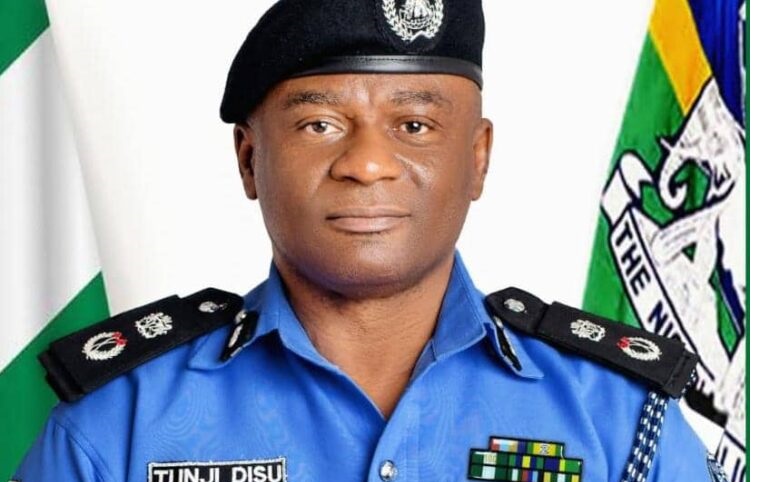
At the centre of the storm is a clash between the Nigerian Bar Association President, Oyinkansola Badejo-Okusanya, and the Inspector-General of Police, Olatunji Disu.
While the NBA president has defended citizens’ right to film police operations in public, the IGP has warned against what he described as irresponsible recording and circulation of police-related videos.
The controversy has now turned the humble smartphone into a potential flashpoint between citizens and law enforcement.
COURT RULING FUELS THE FIRE
The dispute intensified after a March 17 judgment of the Federal High Court in Warri, Delta State, which affirmed Nigerians’ constitutional right to record police officers while they perform their duties in public.
Justice Hyeladzira Nganjiwa, in a suit filed by lawyer Maxwell Uwaifo, also directed police officers to display their names and force numbers during public operations.
The judgment has added legal weight to calls for greater transparency in policing and intensified demands that Nigerians should not be stopped from documenting encounters with law enforcement.
‘WHY FEAR THE CAMERA?’
Amnesty International Country Director, Isa Sanusi, said attempts to obstruct transparency in policing could not be justified.
“It is the duty of the police to tell their men to be decent, to be fair, to be open, to be transparent,” he said.
His argument is straightforward: if officers are acting professionally, being watched should not be a problem.
The General Secretary of the Committee for the Defence of Human Rights, Gerald Katchy, went further, describing filming as a powerful accountability tool.
“In every other clime and in a developed nation, video recording whenever issues of security are concerned is part of the accountability we are pushing for,” he said.
According to Katchy, a phone camera can become crucial evidence when an encounter between police and citizens turns ugly.
Recordings, he said, can help establish what actually happened in cases involving alleged police misconduct or resistance to lawful authority.
He also urged the police to embrace body-worn cameras for officers.
“Filming has helped to establish evidence whenever issues of either misconduct or resistance to authority arise. So, it works in both ways,” he said.
Katchy rejected the argument that filming should demoralise properly trained officers.
“It’s uncalled-for, maybe, IGP saying that it’s demoralising. The ones it will demoralise are those who have ulterior motives,” he said.
AAC: ‘NIGERIANS NEED CAMERAS’
The African Action Congress has also joined the battle, condemning reported attempts to restrict Nigerians from recording police encounters.
The party argued that citizens need cameras for more than just documenting alleged police misconduct.
From “one-chance” robberies and illegal checkpoints to criminals allegedly impersonating policemen, the AAC said Nigerians need the ability to document who stops them, where they are stopped and what happens during the encounter.
The party also invoked Section 39(1) of the 1999 Constitution, which guarantees freedom of expression and the right to receive and impart information.
Its position is that officers performing public duties in public spaces cannot simply rely on privacy concerns to prevent citizens from documenting their activities.
BUT POLICE CRY FOUL
The police, however, insist that accountability should not become an excuse for harassment, obstruction or reckless online exposure.
IGP Olatunji Disu has acknowledged that citizens have the right to record police officers while they are performing their duties in public.
“We are not saying they cannot exercise their rights of recording officers in public places while doing their jobs,” he said.
But he warned that recordings must be handled responsibly.
During an interactive session with crime correspondents in Abuja on May 31, 2026, Disu raised concerns over what he described as the growing trend of recording officers during routine and sensitive operations and posting the footage online without context.
“Yes, accountability is important, and we remain committed to transparency. However, recordings and public engagements involving police officers must be done responsibly and should not be used to harass officers or undermine operational effectiveness,” he said.
He also criticised the practice of turning police officers into social-media entertainment, particularly when they are off duty.
NBA DRAWS THE LINE
The NBA president has sought to draw a distinction between legitimate public scrutiny and invasion of privacy.
Badejo-Okusanya said citizens should be able to record officers carrying out official duties in public.
But she noted that the situation changes when officers are off duty and engaged in private activities.
Recording a policeman while eating, relaxing or going about private business, she argued, could amount to an invasion of privacy.
She pointed to the widespread use of body cameras by police officers in the United States as an example of how recording can strengthen accountability.
“When the US introduced body cams for police officers, it was to promote that,” she said.
Her solution is not a blanket restriction but clearer rules.
“We just need to understand the limits,” she said.
‘A SHORT CLIP MAY NOT TELL THE WHOLE STORY’
Public affairs analyst, Dr Rufus Egbagba, urged Nigerians not to interpret the IGP’s position as a licence for police misconduct. He said the IGP was calling for responsible engagement rather than a total ban on recording.
Egbagba warned that social media can quickly turn a few seconds of footage into a national controversy while leaving out what happened before or after the camera started rolling.“A short video clip may not always capture the full context of an incident: what led up to it, what was said off-camera, or what followed,” he said.
He acknowledged that bad actors exist within the police and should not be protected from accountability.
But he also warned that repeatedly circulating videos of misconduct involving a small number of officers could create the impression that such behaviour represents the entire Nigeria Police Force.
THE BIG QUESTION: WHO WATCHES THE WATCHMEN?
The argument has now moved far beyond smartphones and social media.For human rights advocates, a camera can protect citizens when encounters with police go wrong. For the police, uncontrolled recording can interfere with sensitive operations, expose officers to harassment and distort events when footage is stripped of context.
For citizens, however, the fear is equally clear: if an officer is exercising state power in public, should the public not be allowed to document what is happening?
That question is now at the heart of the showdown.The smartphone has become more than a device for selfies and social-media videos.In the hands of an ordinary Nigerian facing a police officer, it can be a witness, a shield — and potentially the most important piece of evidence in the encounter.The cameras are rolling. And the battle over who has the right to point them at the police is only getting hotter.
Cameras VS Police: Nigerians Rebel Over IGP’s Filming Warning